
Retail Lease Agreements in Delaware: What to Know (Tenant-Friendly Guide for 2026)
Retail lease agreements in Delaware can feel deceptively simple—until you’re six months in and a surprise CAM reconciliation, an HVAC failure, or a “no outdoor seating” rule blows up your budget.
If you’re a small business owner, restaurateur, franchisee, or first-time commercial renter in Wilmington, Newark, Dover, or Sussex County coastal towns, the lease is not just paperwork—it’s your operating system.
This Delaware commercial lease agreement guide is built to be people-first: plain-English explanations, real-world examples, and practical checklists you can use before you sign. You’ll learn the most important clauses, the common pitfalls Delaware tenants hit, and how to negotiate tenant-friendly terms—without turning the deal adversarial.
Important note (not legal advice): Commercial leases are highly negotiable contracts. Delaware’s residential landlord-tenant rules generally don’t protect commercial tenants the same way, so it’s smart to have a Delaware attorney review the final document (and any exhibits) before you sign.
Delaware sources compiling landlord-tenant materials specifically note that commercial rental units are excluded from the Residential Landlord–Tenant Code and that commercial leasing is generally governed by contract principles.
What makes a Delaware retail lease different in 2026

Delaware is small, but the retail leasing landscape isn’t one-size-fits-all. A “good deal” in Newark near the university may be a bad deal in Rehoboth if your revenue depends on summer foot traffic and shoulder-season survival.
Local realities that show up in lease terms:
- Coastal seasonality (Sussex County): Beach-town retail and restaurant spaces often assume heavy summer volume and lighter winter demand. That can affect everything from percentage rent, to minimum operating hours, to “go-dark” restrictions, to how landlords think about short-term pop-up leases.
- Older buildings + renovations: Wilmington and Dover have many older mixed-use and legacy commercial buildings where HVAC age, roof condition, plumbing lines, and electrical capacity can be variable. Older properties increase the importance of maintenance clauses and inspection rights.
- Mixed-use districts and redevelopment: In parts of Wilmington, retail may sit under apartments or within redevelopment zones, which can add constraints: delivery hours, trash handling, venting, signage rules, noise limits, and parking arrangements. Delaware and Wilmington both highlight downtown development district planning and incentives tied to redevelopment areas—helpful context when you’re leasing street-level space in or near active corridors.
- Fewer “default rules” for commercial tenants: In practice, what you negotiate is what you live with. Delaware materials emphasize that commercial rental units are generally outside the residential code framework and governed mainly by contract principles.
Delaware retail lease requirements: what’s truly “required” vs. what’s market practice

When tenants search “Delaware retail lease requirements,” they often expect a checklist of statutory clauses. In reality, commercial retail lease Delaware requirements are less about mandated wording and more about risk allocation: who pays, who maintains, who insures, and what happens when something goes wrong.
That said, there are a few practical “requirements” you should treat as non-negotiable for your own protection:
- Everything material should be in writing: Verbal assurances (“we’ll approve your patio,” “CAM won’t exceed X,” “the roof is brand new”) are risky unless they’re written into the lease, exhibit, or landlord’s signed email incorporated by reference.
- Clear identification of premises + permitted use: Your ability to operate hinges on zoning, center rules, and use clauses.
- Defined rent and additional rent: Base rent is only half the story if you’re in a NNN lease Delaware structure (triple net), paying CAM, taxes, and insurance.
- Insurance requirements: Most landlords require general liability, property coverage for your contents/fixtures, and workers’ comp if you have employees. (Your agent should confirm the exact policy forms and limits required.)
- Recordability (in some deals): Delaware has county recording systems that record instruments including leases. If your lease includes long-term rights (extended terms, options, exclusive rights, or lender requirements), your counsel may recommend recording a memorandum of lease (not the full lease) to protect your leasehold interest. Delaware’s recorder-of-deeds statutes include leases among instruments recorded.
Types of retail leases you’ll see in Delaware
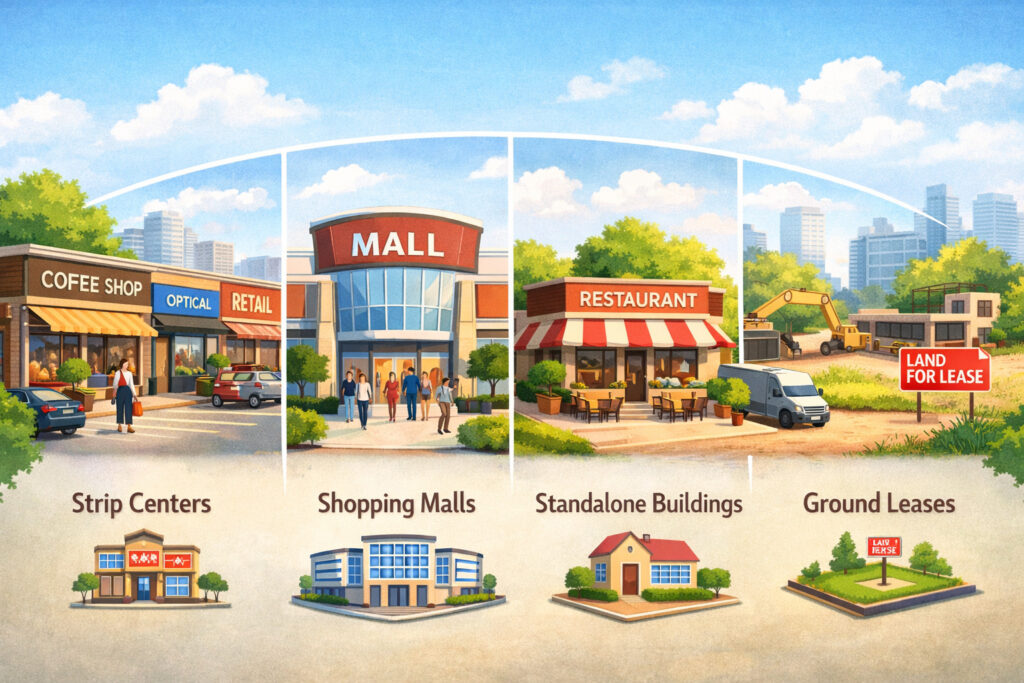
Understanding lease structure is the fastest way to avoid surprise operating costs. In Delaware commercial leasing, you’ll most commonly see gross, modified gross, and NNN formats—plus special forms for restaurants, franchises, and seasonal operators.
Gross lease vs. modified gross vs. NNN lease Delaware
A gross lease typically includes most building operating costs in your rent. It’s simpler to budget for, but the base rent may be higher. A modified gross splits costs—maybe the landlord covers property taxes and building insurance, but you pay utilities and janitorial, or you pay increases above a base year.
A NNN (triple net) lease is common in shopping centers. You pay base rent plus your share of:
- CAM charges Delaware (common area maintenance)
- Property taxes (or your pro-rata share)
- Landlord’s insurance (or your pro-rata share)
Why it matters: Two spaces with the same base rent can have very different “all-in occupancy costs” depending on CAM, tax assessments, and insurance premiums.
Percentage rent leases: base rent vs percentage rent
In many centers (and especially high-demand areas), a lease may include percentage rent: you pay base rent plus a percentage of gross sales over a stated breakpoint.
Tenant-friendly angle:
- Define gross sales carefully (exclude returns, sales tax, tips, delivery platform fees where appropriate, gift card redemptions vs. sales, and online orders fulfilled elsewhere).
- Tie the percentage rent to landlord performance (e.g., co-tenancy protections and operating conditions).
Short-term pop-up leases and seasonal terms
Pop-up leases can be great for testing a location in coastal towns or holiday corridors. But they can also shift risk onto tenants through “as-is” conditions, minimal landlord obligations, and tight surrender deadlines.
What to watch:
- Who pays for temporary improvements and removal?
- Are permits required even for short-term signage, grease equipment, or patio seating?
- Is there an automatic month-to-month rollover (often tenant-unfriendly)?
Rent basics: base rent, escalations, free rent, and late fees
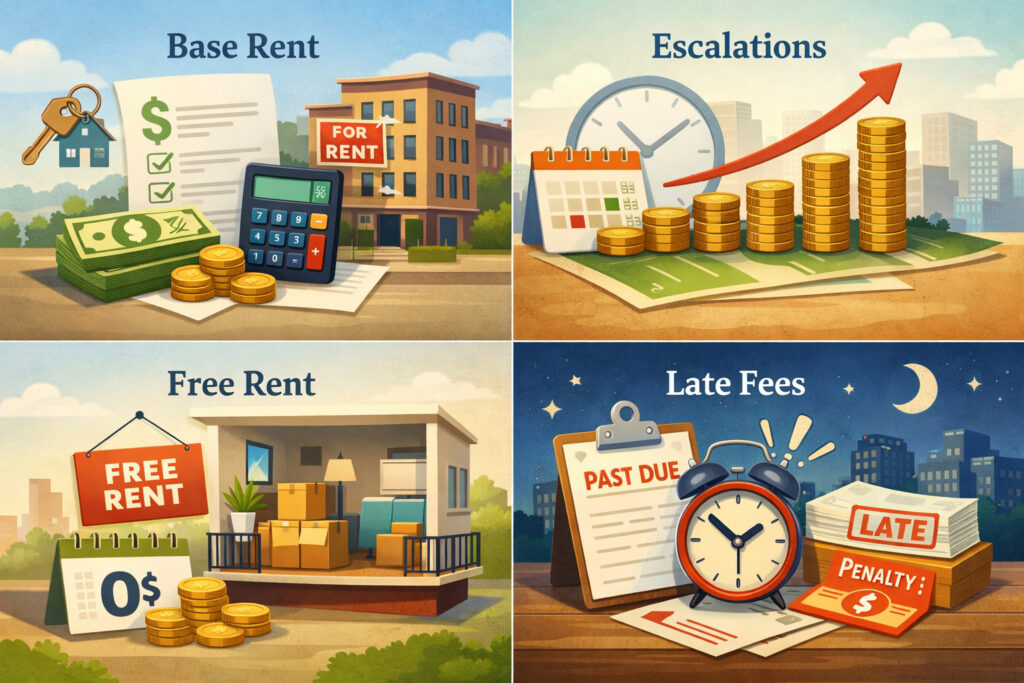
Rent clauses look straightforward until you calculate year three. In retail lease agreements in Delaware, rent provisions often include multiple moving parts.
Rent amount and timing
Confirm:
- Due date (1st of month is typical)
- Method (ACH required? portal fees?)
- Proration for partial month
- Whether rent is “deemed received” when sent vs. when posted
Rent escalation clauses (how rent increases over time)
Common escalation formats:
- Fixed increases: e.g., 3% annually
- Step-ups: predetermined rent schedule
- CPI-based increases: tied to inflation index with floors/caps
Tenant-friendly negotiation idea: If the landlord insists on CPI, ask for a cap and a floor (or at least a cap). CPI can be unpredictable; caps help budgeting.
Free rent / rent abatement
“Free rent” is usually not free. It’s often a concession for:
- Build-out time
- Permitting and inspections
- Soft-opening period
Make it usable: Tie free rent to real conditions, such as: permits delayed, landlord work incomplete, or utility service not available.
Late fees and interest
Late fee clauses can stack:
- Flat late charge
- Daily late charge
- Interest
- Attorney fees (if the lease allows)
CAM/NNN charges and how to audit them (without starting a fight)
CAM is where many tenants get burned—especially in NNN lease Delaware structures. CAM typically covers shared costs: parking lot, landscaping, snow removal, security, management fees, trash areas, lighting, and sometimes capital items.
CAM charges Delaware: what to ask for before signing
Request:
- Current year CAM budget
- Last 2–3 years of CAM reconciliations (if available)
- Definition of CAM and exclusions
- Admin/management fee percentage
- How your pro-rata share is calculated (rentable area definitions matter)
How to audit CAM charges
A tenant-friendly audit process should be:
- Defined (timelines and method)
- Reasonable (business hours inspection, confidentiality)
- Non-punitive (no “you pay landlord’s legal fees no matter what”)
Ask for language that allows you to review supporting documents and challenge errors.
Practical CAM negotiation points:
- Cap annual CAM increases (excluding snow/emergency, or excluding taxes/insurance)
- Exclude capital expenditures (or amortize them properly)
- Exclude landlord’s leasing commissions, legal for new tenants, and “marketing” beyond agreed programs
- Limit management/admin fee
Permitted use, exclusivity clauses retail lease, and operating requirements
Your lease must let you do what you actually do. Use clauses often look like a sentence, but they can decide whether you can add product lines, expand services, or pivot if the market changes.
Permitted use
A narrow permitted use can block:
- Adding alcohol service for a café
- Expanding to prepared foods
- Adding e-commerce pickup
- Adding classes/events
Tenant-friendly approach: Draft a permitted use that is broad enough for future-proofing but specific enough to satisfy landlord/center tenant mix. For franchisees, ensure the lease aligns with the franchise’s operating standards.
Exclusivity clauses retail lease
An exclusivity clause prevents the landlord from leasing to a direct competitor in the same property/center. In some centers, exclusives are limited or reserved for anchors.
Make it meaningful:
- Define competitors precisely (by category and sales mix)
- Include remedies (rent abatement, right to terminate after a cure period)
- Ensure exclusivity applies to landlord-controlled spaces (including kiosks/pop-ups)
Co-tenancy clause and anchor tenant considerations
A co-tenancy clause ties your rent or your right to operate to the presence of an anchor tenant or a minimum occupancy level.
Why it matters in Delaware: In smaller trade areas, one anchor closure can reduce foot traffic dramatically. Co-tenancy can be the difference between surviving and bleeding cash.
Term, option to renew, notice deadlines, and exit strategies
Term length should match your payback period (build-out + ramp-up). Retail leases often run 3–10 years, with renewal options.
Term and renewal options
A renewal option is only valuable if:
- The notice window is workable (not “12 months prior” only)
- The renewal rent is defined (fixed, fair market with guardrails, or a formula)
- Your renewal right isn’t defeated by technical default
Tenant-friendly guardrails:
- Renewal cannot be unreasonably withheld if you’re not in material default
- Fair market rent process includes appraisers/brokers and a cap on increase
- “Time is of the essence” language doesn’t create accidental forfeiture
Lease assignment and sublease rules (your exit plan)
Even if you expect to stay, plan for contingencies:
- Business sale
- Relocation
- Underperforming location
Ask for:
- Reasonable consent standard (“not unreasonably withheld, conditioned, or delayed”)
- Pre-approved transferees (affiliates, franchisees, buyer of business)
- Ability to sublease part of the space (if feasible)
Tenant improvements (TI), build-out, permits, and who owns the work
Build-out is where budget overruns happen—especially if responsibility isn’t crystal clear.
Tenant improvement allowance (TI): what it is
A tenant improvement allowance (TI) is money the landlord contributes toward your build-out. It might be:
- Paid as reimbursement after invoices
- Provided as a construction draw
- Amortized into rent (not “free”)
Typical (real-world) TI issues:
- Allowance only applies to “approved” items
- Strict documentation and lien waivers required
- Deadlines that forfeit the allowance if you open late
Build-out and permitting responsibility
Your lease should state who is responsible for:
- Architectural/engineering plans
- Permit applications and fees
- Code compliance upgrades triggered by your work
- Coordination with landlord’s base building systems (roof penetrations, venting, grease duct, electrical upgrades)
If you’re in Wilmington or other regulated areas, you may encounter design review, signage rules, and inspections that affect timeline. Always build schedule buffers and negotiate rent abatement tied to delays outside your control.
Who owns improvements at the end?
Leases often say improvements become landlord property at the end of term—except trade fixtures you can remove. Define:
- What you can remove
- Repair/restoration obligations after removal
- Whether the landlord can require you to remove improvements (expensive!)
Maintenance and repair obligations (HVAC, roof, plumbing) and cap-ex provisions
Repairs are where “standard lease language” becomes expensive.
The big three: HVAC, roof, and plumbing
Retail tenants often get stuck with HVAC maintenance and sometimes replacement, even though it’s a major capital item.
Tenant-friendly asks:
- Landlord warrants HVAC working condition at delivery
- Landlord covers replacement if unit is near end-of-life or fails early
- Shared systems remain landlord responsibility
For roofs and structural components, tenants should push for landlord responsibility (especially in multi-tenant buildings).
Capital expenditures (cap-ex) in CAM
Even if the landlord pays for replacements, cap-ex can reappear in CAM. Negotiate:
- Capital items excluded from CAM, or
- Amortized over useful life, with reasonable limits
- No double-dipping (landlord can’t recover capital cost twice)
Insurance and indemnification basics (and how to keep them reasonable)
Insurance requirements are standard, but the details matter.
Most landlords require:
- General liability (covers bodily injury/property damage claims)
- Property coverage for your business personal property, inventory, and improvements
- Workers’ compensation if you have employees (statutory)
- Sometimes umbrella/excess liability
Indemnification clauses should be mutual and tied to fault. Watch for “broad form” indemnity that makes you responsible even for landlord negligence.
Tenant-friendly moves:
- Limit indemnity to your negligence/willful misconduct
- Ensure landlord indemnifies you for landlord-controlled areas and systems
- Confirm insurance waiver of subrogation is mutual (where appropriate)
Personal guarantee commercial lease: how to negotiate and limit it
Many Delaware landlords ask small businesses for a personal guarantee commercial lease—especially for first-time tenants, startups, or thinner financials.
A guarantee can be:
- Full guarantee: you’re on the hook for all obligations
- Limited guarantee: capped amount or capped time period
- “Good guy” guarantee: liability ends when you vacate and surrender properly (common in some markets)
Tenant-friendly options to propose:
- Cap guarantee to a set number of months’ rent
- Burn-off after 12–24 months of timely payments
- Reduce scope to rent only (exclude damages, attorney fees, build-out obligations)
- Replace guarantee with higher deposit or letter of credit (if feasible)
Default, cure periods, remedies, and the clauses that decide disputes
Default language isn’t just about worst-case scenarios—it shapes everyday leverage.
Default triggers
Common triggers include:
- Late rent
- Failure to maintain insurance
- Unauthorized alterations
- Use violations
- Nuisance claims
- “Going dark” (not operating required hours)
Cure periods
A tenant-friendly lease includes:
- Notice + cure for monetary default (e.g., 5–10 days)
- Longer cure for non-monetary defaults that take time (with diligent effort)
- No immediate termination for minor breaches
Remedies and attorney fees
Many leases allow landlord attorney fees. You can negotiate mutual attorney-fee clauses or limit recovery to “prevailing party.”
Practical note: Delaware landlord-tenant resources emphasize the importance of written agreements and clear remedies, and commercial disputes often play out under contract principles rather than tenant-protection statutes.
Force majeure clause and “what if something shuts you down?”
A force majeure clause addresses events outside either party’s control—storms, supply disruptions, utility failures, government orders, and similar issues. The biggest tenant misconception: force majeure usually extends deadlines, but often does not excuse rent unless specifically stated.
Tenant-friendly improvements:
- If the premises can’t be used due to casualty or landlord failure, rent abates
- If utilities essential for your business are unavailable, rent abates after a short period
- If permitting is delayed due to government backlog, rent commencement adjusts
Signage rights and outdoor seating: get it in writing
Signage is revenue. So is patio seating for cafés and restaurants. Yet both are frequently governed by separate documents: center criteria, municipal rules, and landlord approvals.
Signage rights
Confirm:
- Where signage is allowed (façade, pylon/monument sign, window vinyl)
- Who pays for installation and maintenance
- Approval timelines (avoid open-ended “landlord discretion”)
- What happens if the center rebrands signage structures later
Outdoor seating (if applicable)
If you want outdoor seating, the lease should cover:
- Permitted area (measured)
- Furniture storage
- Insurance requirements
- Seasonality rules (important in Sussex County)
- ADA accessibility and clear path of travel
ADA compliance responsibility (general) and why it’s often misunderstood
ADA responsibilities can become a tug-of-war: landlord controls the building; tenant controls the customer experience. Leases often push ADA compliance onto tenants broadly, even when improvements involve common areas or base building features.
A practical, general framework many tenants aim for:
- Tenant responsible for ADA compliance within the premises related to tenant improvements and operations
- Landlord responsible for ADA compliance in common areas, parking, sidewalks under landlord control, and base building elements
Because ADA risk is fact-specific, treat this as a key attorney-review item—especially if you’re taking an older space.
Due diligence before signing: the Delaware tenant’s reality checklist
Due diligence is not just “look at the space.” It’s verifying the building can support your business model.
Zoning and permitted use confirmation
Confirm that your intended use is allowed. Don’t assume a prior tenant’s use guarantees yours.
HVAC age and service records
Ask for:
- Unit age
- Service history
- Any warranties
- Last maintenance date
If the landlord won’t provide records, negotiate stronger HVAC protections (repair caps, replacement responsibility, delivery condition).
Utility capacity, grease trap, and fire safety (restaurants)
Restaurants should verify:
- Electrical capacity and panel space
- Gas availability and meter sizing
- Hood/venting feasibility
- Grease trap requirements and location
- Fire suppression and inspections
Parking and access
Confirm:
- Dedicated vs shared parking
- Delivery access
- Dumpster location and pickup schedule
- After-hours access rules
Environmental issues (older sites)
Older properties can have legacy concerns (storage tanks, prior industrial uses). If you see red flags (odors, staining, abandoned equipment), involve professionals.
Negotiation tips (tenant-friendly) that work in real conversations
Negotiation is easier when you ask for solutions, not just concessions.
How to ask for TI allowance and rent abatement
- Present a build-out budget summary (contractor estimate, timeline)
- Explain why the allowance benefits the center (faster opening, better storefront)
- Ask for abatement until open if landlord delays or permitting delays outside your control
Caps on CAM and clarity on audit rights
- Start with “controllable CAM cap”
- Request CAM definitions and exclusions
- Ask for a 60–90 day audit window after reconciliation
Repair responsibilities (especially HVAC/roof)
Use a fairness frame:
- “If I’m paying full rent, I need predictable repair exposure.”
- Offer a repair cap + shared replacement responsibility if landlord won’t fully cover
Renewal options and expansion rights
Ask for:
- One renewal option with a defined process
- Right of first offer/refusal on adjacent space (if expansion matters)
- Renewal rent guardrails (cap on increase)
Special guidance by business type
Different businesses have different failure points. Match your lease focus to your operating reality.
Retail store
Retail priorities usually include:
- Signage visibility and window rights
- Delivery access and storage rules
- Use clause broad enough for new product lines
- Reasonable operating hours requirements
- Theft/security responsibilities (common area vs premises)
Restaurant/café
Restaurant leases should address:
- Venting/hood approvals and roof penetrations
- Grease trap obligations
- Trash, recycling, and odor control rules
- Outdoor seating and alcohol approvals (if applicable)
- Longer build-out timelines and rent commencement tied to permits
Salon/spa
Salon/spa tenants should confirm:
- Plumbing capacity and floor load (if relevant)
- Ventilation requirements for chemicals
- Hours and noise rules in mixed-use buildings
- Exclusive rights (prevent a direct competitor next door)
- Water heater and electrical needs for equipment
Fitness studio
Fitness spaces should focus on:
- Sound attenuation requirements (especially under residential units)
- Structural/floor load issues
- HVAC capacity for high-occupancy classes
- Parking requirements for peak class times
- “No nuisance” provisions that could be weaponized by neighbors
Red flags and common mistakes Delaware tenants make
These are patterns that repeatedly cost tenants money:
- Signing without confirming permitted use and zoning alignment
- Accepting NNN/CAM estimates without seeing history and exclusions
- Taking “tenant responsible for all repairs” language without HVAC/roof carve-outs
- Missing notice deadlines for renewal or termination
- Agreeing to broad personal guarantees without burn-off or caps
- Treating signage/outdoor seating as “later approvals”
- Underestimating permitting timelines and failing to negotiate rent commencement protections
- Not clarifying who owns improvements and what must be removed at move-out
Step-by-step: how to review a retail lease (a practical process)
This process is designed for busy owners who need a repeatable method.
Step 1: Build your “occupancy cost” model
List:
- Base rent
- Estimated CAM/NNN
- Utilities
- Insurance
- Maintenance (HVAC service contract, grease trap, etc.)
Step 2: Map the critical dates
- Rent commencement
- Delivery date
- Build-out deadlines
- Renewal notice windows
- Option exercise dates
- Co-tenancy triggers (if any)
Step 3: Review risk buckets
- Money: rent escalations, CAM, fees
- Operations: use, hours, signage, seating
- Build-out: TI, permits, who pays
- Repairs: HVAC/roof/plumbing allocation
- Exit: assignment/sublease, termination rights
Step 4: Compare lease text to the LOI
Confirm the lease matches the business deal you agreed to. If it doesn’t, treat it as a negotiation—because it is.
Step 5: Send a structured comment list
Instead of “this seems unfair,” send:
- Clause reference
- What it says now
- Proposed change
- Why (budget predictability, operational feasibility)
Step 6: Bring in professionals at the right time
Attorney for contract language, contractor for build-out scope, insurance agent for coverage feasibility—before you’re locked in.
Lease Review Checklist (1-page, practical)
Use this as a punch list while reading the lease.
- Premises & plans
- Address, suite number, rentable square feet, included areas (storage/patio)
- Exhibits match the actual space condition and layout
- Use & exclusivity
- Permitted use supports current and future operations
- Exclusivity language (if any) is specific and enforceable
- Rent & fees
- Base rent schedule is correct
- Escalations are clear and capped where possible
- Late fees, interest, and admin charges are reasonable
- NNN/CAM
- CAM definition includes exclusions
- Pro-rata share calculation is defined
- Audit rights and dispute process included
- Caps on controllable CAM (preferred)
- Term & options
- Renewal options included with workable notice windows
- Rent-setting method for renewal is defined with guardrails
- Build-out & TI
- TI allowance amount, timing, documentation requirements
- Who handles permits, plans, approvals
- Who owns improvements at end; removal/restoration rules
- Repairs & maintenance
- HVAC responsibility is clear (maintenance vs replacement)
- Roof/structure responsibility assigned (prefer landlord)
- Capital expenditures treatment in CAM addressed
- Insurance & indemnity
- Coverage types/limits achievable and not overly broad
- Indemnity tied to fault; landlord covers common areas
- Default & remedies
- Notice and cure periods included
- Attorney fees clause is mutual or limited
- Exit rights
- Assignment/sublease allowed with reasonable consent
- Any recapture rights are limited
- Operational details
- Signage rights documented
- Outdoor seating documented (if applicable)
- Hours, deliveries, trash rules workable
- Documents & promises
- All promises included in writing
- All exhibits reviewed (rules, criteria, center policies)
Negotiation Checklist (tenant-friendly asks that often work)
Bring this list to your broker/attorney and prioritize the top 5–7.
- Money
- TI allowance or landlord work letter
- Free rent / rent abatement tied to build-out and permits
- Cap on controllable CAM
- Audit rights with reasonable timelines
- Repairs
- Landlord covers roof/structure
- HVAC: landlord warrants working condition; tenant cap on repairs; landlord covers replacement
- Flexibility
- Broader permitted use
- Assignment/sublease consent “not unreasonably withheld”
- Kick-out or co-tenancy protection if anchor leaves
- Renewal
- At least one renewal option with defined rent method and guardrails
- Expansion rights (ROFO/ROFR) if adjacent space matters
- Risk reduction
- Personal guarantee cap or burn-off
- Clear rent commencement tied to usable premises
- Force majeure improvements for delays outside your control
- Visibility
- Signage rights spelled out
- Outdoor seating rights spelled out (if needed)
Move-in / Handoff Checklist (so opening day isn’t chaos)
- Keys/access codes delivered; after-hours access confirmed
- Utility accounts transferred; capacity verified
- Certificate of occupancy / inspections scheduled
- Fire system and hood suppression inspected (restaurants)
- HVAC serviced; filters replaced; thermostat functioning
- Water shutoffs, electrical panels, and grease trap access mapped
- Signage approvals obtained in writing
- Trash/recycling pickup schedule confirmed
- Insurance certificates issued and accepted
- Photos taken of premises condition (move-in baseline)
- Landlord punch-list items documented with deadlines
FAQs
Q1) What is a triple-net (NNN) retail lease in Delaware?
Answer: A triple-net lease generally means you pay base rent plus your share of operating costs—typically CAM, property taxes, and landlord insurance. The exact definition depends on your lease, so always review what counts as “additional rent,” what’s excluded, and how your share is calculated.
Q2) What are CAM charges and how do I verify them?
Answer: CAM charges are common area maintenance costs (parking lot, landscaping, snow removal, security, management fees, etc.). To verify them, request the CAM budget, prior reconciliations, a clear definition/exclusions list, and an audit right that lets you review supporting documents.
Q3) Who is responsible for HVAC repairs in a commercial lease?
Answer: It depends on the lease. Many retail leases push HVAC maintenance to the tenant and sometimes replacement too. Tenant-friendly terms include a delivery warranty, repair caps, and landlord responsibility for replacement or major components.
Q4) Can I negotiate a personal guarantee?
Answer: Often, yes. Common compromises include caps (e.g., 6–12 months of rent), burn-off after a payment history, limiting it to rent only, or a “good guy” structure tied to proper surrender.
Q5) What is a TI allowance and what’s typical?
Answer: A TI allowance is the landlord’s contribution to your build-out. “Typical” varies widely by location, condition, and demand. Focus less on averages and more on whether the allowance matches your actual scope, timeline, and reimbursement rules.
Q6) Can I sublease my Delaware retail space?
Answer: Usually only with landlord consent under the lease. Negotiate for consent that isn’t unreasonably withheld, pre-approved transferees (affiliates/buyer), and clear timelines for approval.
Q7) What should I check before signing a retail lease?
Answer: Zoning/use alignment, HVAC age and records, utility capacity, parking/access, build-out feasibility (permits/venting), CAM history, repair obligations, insurance requirements, and exit options (assignment/sublease/renewal).
Q8) How do renewal options work?
Answer: A renewal option gives you the right (not obligation) to extend—if you meet notice deadlines and other conditions. Make sure rent-setting method is defined and the option can’t be defeated by minor technical defaults.
Q9) What happens if the space isn’t ready on time?
Answer: Without protective language, you may still owe rent. Negotiate rent commencement tied to usable delivery, plus abatement if landlord work delays your opening.
Q10) Are verbal promises enforceable in a commercial lease?
Answer: Usually, you don’t want to bet your business on it. Make sure important promises are in the lease or a signed exhibit, because leases often include “entire agreement” clauses that override verbal statements.
Q11) What is an estoppel certificate?
Answer: An estoppel certificate is a signed statement confirming key lease facts (rent, term, defaults). Landlords often request it when refinancing or selling. Negotiate a reasonable response time and a form that matches the lease.
Q12) What is an SNDA (subordination, non-disturbance, attornment)?
Answer: An SNDA defines your relationship with the landlord’s lender. Tenants generally want “non-disturbance” so the lender honors the lease if the property changes hands through foreclosure.
Q13) Do I have to record my lease in Delaware?
Answer: Not always. But Delaware recording statutes include leases among recorded instruments, and some long-term leases or lender-driven deals use a memorandum of lease to protect tenant rights. Discuss with counsel whether recording makes sense for your situation.
Q14) Can contractors file liens related to my tenant improvements?
Answer: Construction liens are a real risk if contractors or subs aren’t paid. Delaware mechanics lien resources explain who may have lien rights and how liens are filed in the county where the project is located. Use proper lien waivers, track payments, and coordinate with your landlord on required processes.
Q15) Who is responsible for ADA compliance—me or the landlord?
Answer: It depends on what’s inside your premises versus common areas and building structure. Many leases push broad responsibility to tenants, so this is a high-priority attorney review item—especially in older buildings.
Conclusion
A retail lease is a business partnership document disguised as real estate paperwork. In Delaware, where commercial leases are largely governed by contract terms rather than the residential code framework, the smartest move is to slow down before signing and speed up after you lock in the right protections.
Your next steps:
- Use the Lease Review Checklist to identify your top risk areas (rent/CAM, repairs, TI, use, exit).
- Run the Negotiation Checklist and pick the 5–7 items that protect your cash flow and operations.
- Get quotes early (contractor + insurance agent) so the lease requirements don’t surprise your budget.
- Ask a Delaware commercial lease attorney to review the final lease and exhibits—especially repairs, default remedies, guarantee language, CAM audit rights, and SNDA/estoppel provisions.