How to Start a Retail Store With a Small Budget
Starting a retail store with a small budget in the U.S. is absolutely possible today if you’re strategic, lean, and digital-first from day one. Instead of massive build-outs and inventory that sits on shelves, modern small retailers use low-cost tools, data, and flexible models to test ideas, grow a loyal audience, and scale only when it makes sense.
In this guide, you’ll learn step-by-step how to start a retail store with a small budget, how to keep costs low without looking “cheap,” and how to position your store for future trends like omnichannel retail and experiential shopping.
Throughout this article, we’ll naturally use the key phrase “how to start a retail store with a small budget” and related terms like “low-cost retail startup,” “small retail store in the U.S.,” “budget-friendly retail strategy,” and “lean retail operations” so the article works well for both users and search engines.
Understanding the Modern Retail Landscape (and Why a Small Budget Can Work)
Before you dive into leases, licenses, and merchandise, it’s important to understand the reality of today’s U.S. retail landscape. Many people assume that you need a huge amount of capital to open a store, but trends in consumer behavior and technology actually favor small, flexible, niche brands.
If you approach how to start a retail store with a small budget the right way, you’re not at a disadvantage—you’re often more agile than large competitors.
Modern customers discover brands on social media, search engines, and marketplaces before they ever walk into a physical location. That means the “front door” of your retail business is as much your Google Business Profile and Instagram feed as it is your actual store entrance.
For a small-budget retailer, this is good news. You can build visibility, test products, and grow a customer base online long before committing to a high-rent storefront.
At the same time, physical retail is shifting toward experiential shopping—people visit stores for curation, guidance, and community, not just to grab a commodity product. This favors specialty, niche, and local retail concepts that feel personal and authentic.
A small budget pushes you to focus on smaller spaces, curated inventory, and targeted marketing—all of which align with this shift.
Looking ahead, the future of retail in the U.S. will continue to blend online and offline channels. Successful small retailers will use omnichannel strategies: click-and-collect, local delivery, in-store events, and mobile checkout.
Learning how to start a retail store with a small budget now means building a flexible foundation that can adapt as technology and consumer expectations evolve. Instead of trying to look like a big-box store, your goal is to be lean, specialized, and customer-obsessed.
Clarifying Your Retail Niche and Target Customer
The first major step in how to start a retail store with a small budget is getting crystal clear about your niche and your ideal customer. When you don’t have unlimited funds, you can’t afford to be “for everyone.” Instead, you should be the best option for a very specific type of shopper with a clear need or interest.
Start by asking: What problem or desire will my store solve? Maybe you offer affordable sustainable clothing for young professionals, curated home décor for new homeowners, specialty snacks from specific regions, or supplies for a hobby like knitting, gaming, or gardening.
The more specific your niche, the easier it is to curate inventory, design your brand, and focus your marketing.
Next, define your ideal customer persona. Think about age, income level, lifestyle, interests, and shopping habits. Are they busy parents who value convenience? Students who care about price and trends? Health-conscious consumers looking for organic or local products?
When you understand who they are and what motivates them, you can design a store that speaks directly to their needs—even on a tight budget.
This niche clarity directly affects your cost structure. With a focused assortment, you avoid overstocking slow-moving products and can negotiate better terms with a smaller set of suppliers.
Marketing becomes cheaper because you can target specific keywords, locations, and interests instead of paying to reach broad audiences. One of the smartest ways to approach how to start a retail store with a small budget is to niche down so far that you become the obvious destination for a particular group of people.
In the future, data tools for small businesses will make this even more powerful. You’ll be able to analyze customer behavior from your point-of-sale system, online store, and social media to refine your niche over time, expand into adjacent product categories, and phase out what doesn’t resonate—without guessing.
Choosing the Right Retail Business Model on a Small Budget
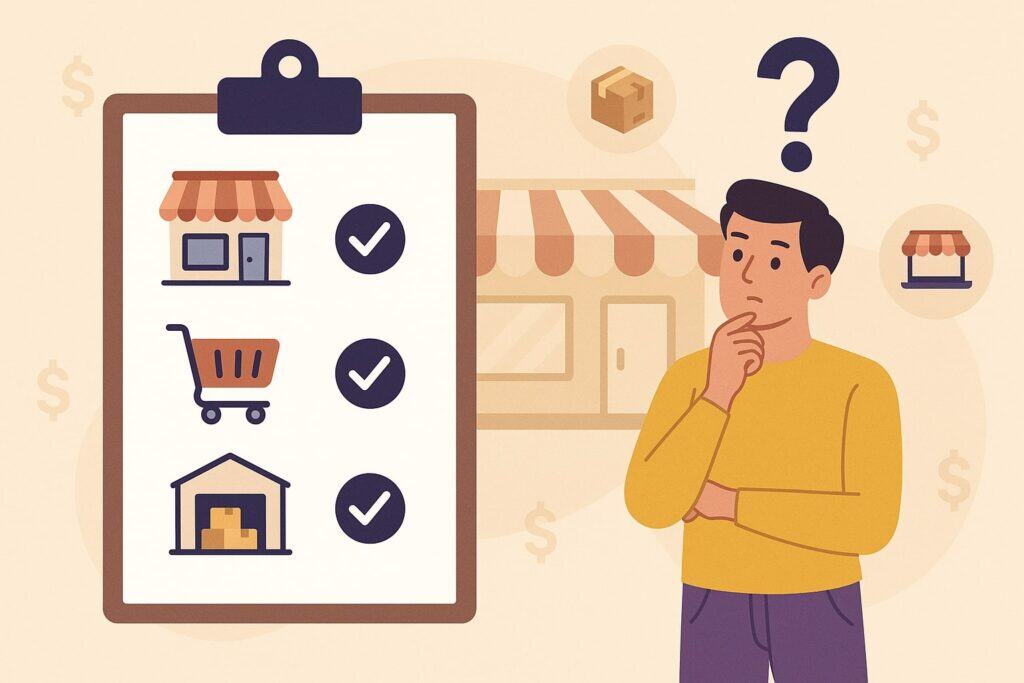
Your business model is the backbone of how to start a retail store with a small budget. It determines how much you spend up front, how quickly you can adjust, and how scalable your concept is.
A traditional full-time brick-and-mortar store is just one option among many. By choosing the right model, you can reduce risk, lower overhead, and test your idea before committing to long-term obligations.
Common budget-friendly options in the U.S. include pop-up shops, shared retail spaces, market stalls, and hybrid online–offline models. A pop-up store allows you to rent a small space for a short period—such as during holiday seasons or local events—so you can validate your concept and build buzz.
Shared spaces let multiple brands split rent, utilities, and foot traffic, significantly decreasing costs. Market stalls at farmers markets, craft fairs, or local events offer direct access to customers without the complexity of long-term leases.
A hybrid model combines an online store (or even just social selling) with a small showroom or local pickup space. In this model, you use digital channels to handle most sales and use your physical presence primarily for brand experience, fitting rooms, or product demos.
This kind of flexible approach fits perfectly with the idea of how to start a retail store with a small budget, since you keep fixed costs low while still enjoying some benefits of in-person retail.
Looking forward, expect more landlords in the U.S. to offer short-term leases, revenue-share agreements, or modular retail units in malls and mixed-use developments.
Emerging tools will continue to support “retail-as-a-service” platforms where you can pay a monthly fee to access fixtures, payment processing, and even staff. When thinking about how to start a retail store with a small budget, keep your business model flexible so you can take advantage of these evolving options.
Creating a Lean but Realistic Startup Budget
A core part of how to start a retail store with a small budget is building a lean, honest startup budget. You need to know exactly what you must spend, what you can delay, and where you can creatively reduce costs without hurting the customer experience.
Underestimating costs will cause stress and cash-flow issues later; overestimating without prioritizing might discourage you from starting at all.
First, list your non-negotiable startup costs. These typically include legal registration fees, business licenses, any required permits, initial inventory, basic store fixtures (shelves, racks, displays), a point-of-sale system, insurance, and a small marketing budget.
For U.S. retailers, don’t forget to factor in local sales tax registration and potential deposits for utilities or small equipment.
Second, identify variable and deferrable costs. This group might include elaborate signage, premium fixtures, extensive décor, advanced software, and large initial inventory orders.
When learning how to start a retail store with a small budget, your rule should be: spend first on anything that directly affects sales or legal compliance, and postpone anything that can be upgraded later. For example, simple painted shelves and a clean layout can be just as effective as designer fixtures in the early months.
Third, plan for working capital—cash reserved to pay expenses like rent, utilities, payroll (if any), and reorders during your first few months. Many new retailers forget that it may take time for sales to stabilize.
A realistic buffer will help you survive slow periods, test promotions, and adapt inventory. Aim to forecast at least three to six months of essential operating expenses.
As the U.S. retail environment evolves, more tools will become available to help you manage a small-budget retail startup: micro-loans, revenue-based financing, buy-now-pay-later for business inventory, and integrated financial dashboards in your POS.
These tools don’t replace disciplined budgeting, but they do expand your options for smoothing cash flow as you grow.
Legal Steps, Licenses, and Permits for U.S. Retailers
Understanding the legal side is a critical part of how to start a retail store with a small budget in the U.S. While requirements vary by state and city, there are common steps you’ll likely need to follow. Getting this right early prevents fines, forced closures, or unexpected compliance costs later.
Start by choosing a business structure, such as a sole proprietorship, partnership, or limited liability company (LLC). Many small retailers choose an LLC for liability protection and tax flexibility, but it’s wise to consult an accountant or small-business attorney if you can. Registration fees differ by state, so include this in your budget.
Next, you’ll typically need to apply for a state sales tax permit (sometimes called a seller’s permit or resale certificate). This allows you to collect sales tax from customers and purchase inventory tax-free for resale.
You’ll also need a local business license from your city or county, and possibly zoning clearance if you plan to operate a physical storefront in a specific neighborhood.
Depending on your products and location, there may be additional permits and regulations—for example, health department permits for food items, fire inspections for certain occupancy levels, or age-restricted sales rules for products like tobacco or specific regulated items.
Taking time to research your state and city requirements is essential when figuring out how to start a retail store with a small budget because non-compliance fines can quickly eat into your limited funds.
In the future, you can expect more online and centralized portals where small-budget retail owners can register, submit documents, and pay fees digitally, reducing bureaucratic friction.
For now, being organized—keeping a checklist of required licenses, renewal dates, and filing deadlines—is a cost-effective way to protect your retail business and avoid legal surprises.
Selecting a Low-Cost, High-Potential Location (or Going “Micro” Physical)
Location strategy is one of the biggest levers in how to start a retail store with a small budget. The traditional advice of “pay top dollar for the busiest street” no longer fits every scenario. Instead, you want a right-sized and right-context location that balances visibility, rent, and your business model.
If you’re opening a physical storefront, look for emerging neighborhoods, smaller side streets near popular areas, or spots inside shared retail spaces and markets. These locations often offer lower rent while still providing reasonable foot traffic from your target customers.
Consider proximity to complementary businesses: for example, a specialty baby boutique near pediatric clinics or family cafes, or a hobby store near schools and community centers.
Another smart approach in how to start a retail store with a small budget is going “micro” physical. Instead of a full-size store, you might open a small showroom, kiosk, or pop-up inside another business or community hub.
This allows you to test how customers respond to your products with minimal build-out costs. Landlords with vacant spaces are increasingly open to short-term deals, revenue sharing, or reduced rent in exchange for activating their property.
As omnichannel retail continues to grow, your physical location can serve as a logistics hub as well as a shopping space. You can offer in-store pickup for online orders, local delivery, and same-day fulfillment from your store.
The goal is to make your small, budget-friendly location work harder by supporting multiple roles. When you think about how to start a retail store with a small budget, consider location not just as “where people walk by” but as part of a broader ecosystem that connects your online presence and local community.
Designing a Professional Store Layout on a Tight Budget
A polished retail environment doesn’t require designer fixtures or luxury décor. A key part of how to start a retail store with a small budget is learning how to make your space look intentional, welcoming, and on-brand using cost-effective materials and smart layout decisions. Customers should feel that your store is thoughtfully curated—not “cheap.”
Begin with functionality and flow. Plan how customers will move through your store from entry to checkout. Highlight your best-selling or high-margin items in “hot zones” such as near the entrance or at eye level on central shelves.
Use simple, clean fixtures—like painted wood shelves, gridwall panels, and basic display tables—that can be rearranged as your assortment evolves. Good lighting is one of the most powerful tools for making a small budget store feel more premium; invest in bright, warm lighting where possible.
Next, focus on branding and atmosphere. Choose a simple color palette and stick to it for walls, signage, and small décor touches. Hand-written chalkboard signs or printed signs in inexpensive frames can look stylish and professional when they’re consistent and clear.
Background music at a comfortable volume and a subtle scent can create a pleasant experience without major expense. These details matter when thinking about how to start a retail store with a small budget because they shape the emotional impression customers take away.
Going forward, more small retailers will experiment with modular layouts, movable fixtures, and flexible spaces that can quickly transform for events, workshops, or seasonal promotions.
You don’t need to implement futuristic technology to benefit from this trend; simply choosing versatile fixtures now will make it easier to adapt and grow your store over time while keeping costs under control.
Building a Smart, Low-Risk Inventory Strategy
Inventory is often the single largest investment when exploring how to start a retail store with a small budget. Stocking too much—or stocking the wrong items—can trap your cash and create stress. Stocking too little can lead to lost sales and frustrated customers. The key is to be deliberate, data-driven, and flexible from the start.
Begin by defining a tight, curated assortment aligned with your niche and brand. Instead of carrying dozens of similar products, choose a smaller selection of best-in-class items that cover your customers’ main needs.
For example, a small beauty store might focus on a few clean skincare brands and essential products rather than trying to imitate a big-box retailer with hundreds of SKUs.
Whenever possible, negotiate favorable terms with suppliers: lower minimum order quantities (MOQs), the ability to reorder frequently, and flexible payment terms.
Some wholesalers, especially if they serve small retailers, may offer starter packages or consignment arrangements where you pay only for items that sell. This can greatly reduce the cash needed to start a retail store with a small budget.
Use simple tools—like spreadsheets or built-in POS inventory reports—to track sales, identify fast and slow movers, and inform reorders. Plan a strategy for markdowns and promotions to clear slow-moving stock without training customers to wait for constant discounts.
Over time, your inventory strategy should become more precise as you learn what your local customers respond to.
Looking ahead, even small U.S. retailers will gain access to more advanced tools like AI-driven demand forecasting and automated reorder suggestions integrated into affordable point-of-sale systems.
Starting with disciplined habits now sets you up to take advantage of those tools later, making how to start a retail store with a small budget not just about launching, but about building a long-term, profitable inventory model.
Affordable Branding: Name, Logo, and Brand Story
A strong brand is one of the most powerful assets when you’re learning how to start a retail store with a small budget. Branding isn’t just a logo; it’s the promise you make to your customers and the feeling they have when interacting with your store. The good news is you don’t need a big agency budget to build a memorable, professional brand.
Start with your brand positioning: what makes your store unique, and why should someone choose you instead of an online giant or a chain store?
Maybe it’s your expertise, your curated selection, your commitment to local makers, or your focus on sustainability or inclusivity. Turn this into a simple brand statement and a few key messages that you’ll repeat in your signage, website, and social media.
Choose a store name that’s easy to spell, pronounce, and remember. Check that the name is available as a domain and on social media platforms where you plan to be active.
For a logo, consider using affordable logo creation tools or hiring a freelance designer for a simple design package. Prioritize clarity and legibility over complex graphics. Use the same colors and fonts across your logo, website, business cards, and in-store signage to create a cohesive look.
Your brand story is the heart of how to start a retail store with a small budget that still feels premium. Share why you started the store, what you care about, and how your products help your customers live better or express themselves.
You can tell this story on your About page, in welcome signs in your store, and through social media captions and videos. Customers are often happy to support small retailers when they understand the human story behind the brand.
In the future, authenticity and values-driven branding will matter even more as consumers become more selective. Small retailers that communicate genuinely and consistently will stand out—even if their marketing budgets are modest.
Setting Up Low-Cost Retail Technology and Payment Systems
Technology and payment systems used to be a big fixed cost for retailers. Today, they’re one of the easiest parts of how to start a retail store with a small budget thanks to modern cloud-based tools and mobile hardware.
With the right setup, you can accept cards, digital wallets, and contactless payments; track inventory; and view reports from anywhere—all without investing in heavy equipment.
Choose a point-of-sale (POS) system designed for small businesses. Many providers offer affordable monthly plans and low-cost card readers that connect to a tablet or smartphone.
Look for features like inventory tracking, sales reporting, customer profiles, and integration with an online store platform. This kind of all-in-one solution simplifies operations and helps you make data-driven decisions.
Next, decide which payment methods you will accept. U.S. customers expect to use debit and credit cards, and many now prefer digital wallets like Apple Pay or Google Pay. Some retailers also accept contactless payments via smartphones and watches.
Multiple payment options can increase conversions and customer satisfaction. As you explore how to start a retail store with a small budget, compare processing fees and hardware costs, and make sure you understand your rates and any contract terms.
Beyond payments, consider low-cost tools for email marketing, social media management, and basic accounting. Many software tools offer free tiers or low introductory plans suitable for new retailers. Using these tools from day one helps you stay organized and build a marketing engine even before you hire staff.
In the future, small retailers will see more automation—like integrated real-time inventory across online and offline channels, AI recommendations for upsells, and frictionless checkout experiences.
By choosing flexible, modern systems now, you’ll be able to upgrade as these features become more mainstream without rebuilding your entire technology stack.
Marketing Your Retail Store on a Small Budget (Online and Offline)
Marketing is where many new owners worry about costs. Fortunately, a large part of how to start a retail store with a small budget involves using free or low-cost marketing channels intelligently, instead of paying for broad traditional advertising. Your goal is to be discoverable, trustworthy, and locally relevant.
Start with local SEO and online presence. Create a Google Business Profile with accurate contact information, business hours, and photos of your store and products. Encourage satisfied customers to leave reviews.
This helps you appear in local search results when customers look for your category, like “gift shop near me” or “sustainable clothing store.” Make sure your website includes clear location details, directions, and an embedded map if possible.
On social media, choose one or two platforms where your target customers are active—often Instagram, Facebook, or TikTok. Post consistently with a mix of product photos, behind-the-scenes content, staff picks, and customer stories.
Use local hashtags and engage with other local businesses and community pages. This approach supports your goal of learning how to start a retail store with a small budget because it relies more on time and creativity than cash.
Offline, take advantage of community-based marketing. Partner with nearby businesses to cross-promote, co-host events, or create joint giveaways. Participate in local fairs, markets, and neighborhood events to introduce your store to new audiences. Simple printed flyers, business cards, or postcards in complementary businesses can also be effective.
Paid ads can be used strategically in small doses—such as geo-targeted social media ads around your neighborhood or keyword-based search ads for very specific phrases. Start with a small budget, test messages and images, and scale only what works.
The marketing side of how to start a retail store with a small budget is about iterating quickly, tracking results, and investing more only where you see real returns.
Hiring, Training, and Managing Staff (or Staying Solo at First)
People are at the heart of retail. Even when you focus on how to start a retail store with a small budget, you need to think carefully about staffing.
For many new retailers in the U.S., it makes sense for the owner to work in the store initially to control costs and stay close to customers. Over time, you may hire part-time or full-time staff as sales grow.
If you plan to be owner-operated at first, treat your own time as a cost when you build your budget, even if it doesn’t show as payroll on your income statement.
This helps you understand whether the business model can eventually support additional staff. Make sure you learn basic customer service skills, POS operation, inventory handling, and merchandising.
When you’re ready to hire, start with part-time associates who can cover busy times or give you days off. Look for people who genuinely like your product category and enjoy helping customers.
A positive attitude and reliability are often more valuable than prior retail experience. As part of how to start a retail store with a small budget, streamline training using simple checklists, written procedures, and short videos so new hires can quickly learn your standards.
In the U.S., you’ll need to handle employment regulations, including payroll taxes, workers’ compensation insurance (depending on your state), and compliance with wage and hour laws.
Many small retailers use affordable payroll services that automate tax calculations and filings. This protects you from mistakes that could be costly later.
The future of small retail staffing may incorporate more flexible scheduling, shared staff across multiple nearby stores, and cross-training for tasks like social media content creation and in-store customer service.
As you think about how to start a retail store with a small budget, consider hiring people who are comfortable both in person and online—helping with merchandising during slow times and creating content or fulfilling online orders when the store is quiet.
Managing Cash Flow, Pricing, and Profit Margins
Even a beautiful store with great products can struggle if cash flow and pricing are not managed well. A crucial part of how to start a retail store with a small budget is understanding your numbers and making informed decisions about pricing, margins, and expenses. This financial discipline can be the difference between survival and burnout.
Start by calculating your cost of goods sold (COGS) for each product, including purchase price, inbound shipping, packaging, and any handling costs. Then determine your target gross margin—the difference between your selling price and COGS.
In many retail categories, typical margins range from 40% to 60% or more, but this varies by niche and competition. Your pricing must be high enough to cover operating expenses like rent, utilities, payroll, marketing, and your own compensation.
When thinking about how to start a retail store with a small budget, avoid the temptation to underprice just to attract customers. Instead, justify your prices with value: quality, curation, expert guidance, and a pleasant shopping experience. Use tiered pricing (good, better, best) to provide options for different budgets while maintaining healthy margins.
Monitor cash flow regularly—weekly, if possible. Track inflows from sales and outflows for inventory, rent, and other expenses. Plan inventory purchases around actual sales data and upcoming promotions rather than guesswork. If cash is tight, negotiate extended payment terms with suppliers where possible or adjust reorder quantities.
As technology evolves, small retailers will likely gain access to more sophisticated, yet affordable, tools for forecasting cash flow and optimizing pricing based on demand patterns. Building strong financial habits now makes it easier to adopt these tools and grow sustainably.
Embracing Omnichannel Retail: Online Store, Local Delivery, and Click-and-Collect
In today’s environment, a purely offline strategy is risky. A modern approach to how to start a retail store with a small budget often includes some online elements, even if your main focus is a small physical location in the U.S. Customers expect to browse online, check availability, and sometimes buy without coming into the store.
You don’t need a huge e-commerce operation to get started. Begin with a simple website that includes basic information, a selection of key products, store hours, and contact details.
Many website builders offer affordable templates tailored for small retailers, with built-in shopping cart and payment features. Over time, you can expand the number of products online and integrate inventory with your POS system.
Offer click-and-collect (buy online, pick up in store) to give local customers convenience and flexibility. This option works especially well when you’re thinking about how to start a retail store with a small budget because it uses your existing store and staff without requiring separate warehouse facilities.
You can also explore local delivery—either self-managed or via delivery partners—for nearby customers who prefer doorstep service.
Promote your online store through your physical location and vice versa. Use QR codes in-store that link to product pages or social media, and mention in your online content that customers can visit you in person to see and try items. This omnichannel approach makes your retail brand more resilient to changes in foot traffic, weather, or local conditions.
Looking ahead, shoppers will expect even smoother experiences: real-time inventory visibility, flexible pickup options, and personalized recommendations.
By starting with a basic omnichannel setup as part of how to start a retail store with a small budget, you’ll be well positioned to adopt more advanced features when the time is right.
Measuring Performance and Optimizing Your Retail Store Over Time
Launching your store is just the beginning. A major element of how to start a retail store with a small budget is committing to continuous improvement. Because your resources are limited, you must be deliberate about what you change, where you invest, and how you measure success.
Identify a few key performance metrics to track regularly. These might include total sales, average transaction value, number of transactions, gross margin percentage, and inventory turnover (how quickly you sell through your stock).
If you use a modern POS or e-commerce platform, many of these metrics will be available in built-in reports. Look at trends over time, not just daily fluctuations, to understand whether your strategies are working.
Collect customer feedback in simple ways: short conversations at checkout, suggestion boxes, follow-up emails, or online reviews. Ask what they love, what they’d change, and what products they wish you carried.
This feedback helps you refine your assortment, layout, and service standards without paying for formal market research.
When you consider how to start a retail store with a small budget, also consider how you will test and iterate. Try small experiments: rearrange displays, adjust signage, run limited-time promotions, or host events.
Track the results and keep what works. The key is to make changes that have measurable outcomes rather than constantly changing things without a plan.
In the future, small retailers will likely benefit from more automated insights—such as AI-supported dashboards that highlight trends or flag declining product lines.
By building a culture of measurement and experimentation from day one, you’ll be ready to use these tools effectively and keep your store competitive even as the retail environment evolves.
FAQs
Q1. How much money do I need to start a small retail store?
Answer: The exact amount varies widely based on location, size, and niche, but many entrepreneurs are exploring how to start a retail store with a small budget in the U.S. launch with a few thousand to tens of thousands of dollars rather than six-figure investments.
You can keep costs low by starting with a pop-up, market stall, or very small storefront, using simple fixtures, and maintaining a tight inventory selection. Focus on legal requirements, basic equipment, and a modest marketing budget first, then upgrade gradually as revenue grows.
Q2. Can I start a retail store from home to save money?
Answer: Yes, many people begin their journey in how to start a retail store with a small budget by operating from home, particularly if they sell online or at local markets. Home-based retail still requires compliance with local zoning laws, business licenses, and any product-specific regulations (especially for food or cosmetics).
Over time, you can move into a physical location once you’ve validated demand and built a customer base. This staged approach keeps risk lower and allows you to refine your concept.
Q3. What are the biggest mistakes to avoid when starting a retail store with limited funds?
Answer: Common mistakes in how to start a retail store with a small budget include over-ordering inventory, choosing a location with rent that is too high for your sales volume, ignoring legal and tax obligations, and trying to appeal to everyone instead of a specific niche.
Another mistake is underestimating working capital needs—assuming that sales will immediately cover all expenses. To avoid these pitfalls, plan a realistic budget, track numbers closely, start small, and be willing to pivot based on customer feedback and sales data.
Q4. How can I market my store if I have almost no marketing budget?
Answer: When learning how to start a retail store with a small budget, focus on low-cost, high-impact marketing. Set up your Google Business Profile with photos and updated hours, encourage customers to leave reviews, and post regularly on social media platforms where your audience spends time.
Collaborate with nearby businesses, participate in local events, and use in-store signage and word-of-mouth to spread the word. Small, targeted online ads can be effective once you know which messages and audiences respond best, but you can get started with primarily organic efforts.
Q5. Is opening a retail store still worth it in the age of online shopping?
Answer: Yes—if you approach it strategically. Understanding how to start a retail store with a small budget today includes recognizing that physical and online retail complement each other. Many customers enjoy discovering products in person, getting expert advice, and attending events, while also appreciating the convenience of ordering online.
A small, well-positioned store that integrates online tools, click-and-collect, and local delivery can create a strong competitive advantage, especially in niche categories and local communities.
Conclusion
Learning how to start a retail store with a small budget in the U.S. is about more than cutting costs—it’s about being intentional, focused, and adaptable. Instead of trying to replicate large, established retailers, you’re building a lean, modern, niche-driven business that fits today’s consumer behavior and tomorrow’s trends.
By clarifying your niche and ideal customer, choosing a flexible business model, and creating a lean but realistic budget, you lay the groundwork for a sustainable store.
Handling legal requirements early, selecting a right-sized location, and designing a functional layout help you avoid big mistakes. Smart inventory management, thoughtful branding, and affordable technology form the operational core of your business.
From there, you use low-cost marketing, strong customer relationships, and careful financial management to grow. You embrace omnichannel strategies—using online and offline channels together—to increase resilience and reach. And you continually measure, test, and refine your approach based on data and feedback.
The path of how to start a retail store with a small budget isn’t always easy, but it is absolutely achievable. With careful planning, creativity, and a willingness to learn, you can open a store that reflects your vision, serves your community, and builds a profitable, future-ready retail brand—without needing a massive upfront investment.