Food Safety Essentials Every Restaurant Should Follow
Running a successful restaurant in Delaware is about much more than great flavors and friendly service. Every meal you serve is also a promise: that your guests can trust your kitchen to follow the food safety essentials every restaurant should follow.
When food safety fails, that promise is broken, and the impact can be severe—foodborne illness, legal action, damaged reputation, and even permit suspension.
Delaware follows its own State Food Code, based on the FDA Food Code, enforced primarily by the Office of Food Protection (OFP) within the Division of Public Health. This framework regulates permitting, inspections, enforcement, and the standards your restaurant must meet to operate legally and safely.
Modern food safety is also evolving. The 2022 FDA Food Code refined guidance around employee health, time and temperature control, allergens, and consumer advisories, reinforcing a preventative, science-based approach.
This in-depth guide walks through the food safety essentials every restaurant should follow in Delaware, with practical examples, regulatory context, and a look at where food safety is headed in the future.
Use it as a road map to protect guests, your team, and your business—while also making your restaurant more efficient and inspection-ready.
Why Food Safety Essentials Matter for Every Restaurant in Delaware
Food safety isn’t just a checklist item; it’s the backbone of public health and long-term profitability. In Delaware, food establishments are regulated under the State of Delaware Food Code, which covers food handling, storage, employee hygiene, equipment sanitation, and more.
When a restaurant ignores food safety essentials, the consequences can include:
- Foodborne illness outbreaks
- Emergency permit suspension for imminent health hazards
- Costly closures and remediation orders
- Civil lawsuits and insurance complications
- Long-term damage to public trust
The FDA identifies five major risk factors that repeatedly drive foodborne illness outbreaks: improper holding temperatures, inadequate cooking, contaminated equipment, food from unsafe sources, and poor personal hygiene. These are exactly the areas the food safety essentials every restaurant should follow are designed to control.
Delaware’s consumers are increasingly proactive about safety. The Division of Public Health allows the public to search inspection histories and ratings for specific restaurants, giving guests visibility into your food safety performance. A single bad inspection can spread quickly through local word of mouth and online reviews.
In this environment, prioritizing food safety essentials is not just about avoiding violations; it’s about building a brand known for reliability, transparency, and care.
Restaurants that consistently follow Food Safety Essentials Every Restaurant Should Follow can use that reputation as a competitive advantage, attracting customers who want to dine with confidence.
The Cost of Foodborne Illness for Restaurants
To understand why food safety essentials every restaurant should follow are so critical, it helps to look at the real cost of a foodborne illness incident. Even one confirmed case associated with your restaurant can trigger a chain of events that is far more expensive than investing in prevention.
First, there is the direct cost of responding to the incident: discarding food, deep cleaning, retraining staff, and possibly consulting with food safety experts. If inspectors determine that an imminent health hazard exists, your operating permit may be summarily suspended until corrective actions are taken, which means immediate loss of revenue.
Second, there are regulatory and legal consequences. You may face fines, administrative penalties, or requirements for more frequent inspections.
If multiple guests become ill, liability claims and lawsuits can quickly outstrip insurance coverage. Legal processes also consume management time and attention that should be focused on running the business.
Third, there is the reputational damage. Because Delaware offers public access to inspection histories and grading, consumers can see whether a restaurant has critical violations or “fail” grades.
In a small state with close-knit communities, negative news about hygiene and safety spreads fast, especially on social media and local review platforms.
Finally, staff morale takes a hit. Working through a foodborne illness crisis is stressful for employees, who may feel blamed, overwhelmed, or fearful about their own health. A strong culture built around food safety essentials—clear procedures, training, and leadership support—helps prevent these crises and creates a safer, more stable workplace for everyone.
Looking ahead, regulators and consumers are only getting more data-driven and less tolerant of risk. That means restaurants that ignore Food Safety Essentials Every Restaurant Should Follow will find it harder and harder to compete.
Delaware’s Food Safety Regulatory Landscape
In Delaware, the primary authority overseeing restaurant food safety is the Division of Public Health’s Office of Food Protection (OFP). OFP works with Community Environmental Health Services staff to monitor compliance with the State of Delaware Food Code, focusing on permitting, routine inspections, complaint investigations, and enforcement actions.
The Delaware Food Code is built on the FDA Food Code and sets requirements for:
- Food establishment permits and change-of-ownership approvals
- Plan review for new or remodeled food operations
- Food handling, storage, and preparation standards
- Employee hygiene and health controls
- Cleaning, sanitizing, and facility maintenance
- Enforcement procedures, including permit suspension for imminent health hazards
Restaurants must maintain a valid Food Establishment Operating Permit, undergo routine inspections, and correct violations within specified time frames. Inspection frequency can vary depending on risk level and compliance history; poor compliance can lead to more frequent inspections and strict follow-up.
Recent Delaware legislation has required a grading and classification system for inspection results, helping consumers understand how well a restaurant complies with food safety standards. This increases public pressure for restaurants to consistently apply the food safety essentials every restaurant should follow.
In the future, expect further alignment with the latest FDA Food Code versions, expanded digital access to inspection data, and more emphasis on risk-based inspection models.
Restaurants that integrate Food Safety Essentials Every Restaurant Should Follow into daily operations will be better prepared for these changes and more resilient in a tightening regulatory environment.
Building a Strong Food Safety Management System
A truly safe restaurant doesn’t rely only on individual habits; it relies on a food safety management system (FSMS) that turns food safety essentials into consistent, repeatable processes.
Delaware expects restaurants to demonstrate knowledge of the food code and maintain controls that reduce the FDA’s five major risk factors for foodborne illness.
A robust FSMS often draws from HACCP (Hazard Analysis and Critical Control Points) principles, even if a full formal HACCP plan isn’t required. The core idea is simple: identify hazards, determine critical control points (like cooking and cooling), set limits (like specific temperatures), monitor, and correct issues quickly.
For a Delaware restaurant, that means putting the Food Safety Essentials Every Restaurant Should Follow into written policies, log sheets, training programs, and management oversight. It also means designating responsible managers, maintaining records, and using data—such as thermometer logs and inspection reports—to continually improve.
Digital tools are increasingly part of the FSMS, with cloud-based checklists, temperature probes that sync to apps, and automated alerts when refrigerators rise above safe temperatures. Over the next few years, expect even more integration of sensors, mobile devices, and AI-based analytics into everyday food safety essentials every restaurant should follow.
Written Food Safety Plan and Standard Operating Procedures (SOPs)
One of the most overlooked food safety essentials every restaurant should follow is having a clear, written food safety plan and SOPs that match how your kitchen actually functions. Regulators and inspectors expect not only verbal knowledge but documented procedures that reflect the Delaware Food Code and applicable sections of the FDA Food Code.
Your written plan should cover at least:
- Personal hygiene SOPs: Handwashing steps, glove policies, illness reporting, uniform requirements.
- Time and temperature control: Cooking temperatures, cooling methods, reheating standards, hot and cold holding parameters.
- Cross-contamination controls: Color-coded cutting boards, storage hierarchy, raw vs ready-to-eat separation, allergen separation.
- Cleaning and sanitizing: Frequencies, approved chemicals, dilution instructions, test strip use, and equipment breakdown steps.
- Receiving and storage: Checking deliveries, rejecting unsafe food, labeling, date-marking, and stock rotation (FIFO).
- Pest control and facility maintenance: How to report issues, approved pest management providers, trash and grease handling.
SOPs should be:
- Written in plain, practical language appropriate for your staff
- Translated into any other languages spoken by your team
- Accessible in key locations (prep areas, dish area, office)
- Referenced regularly during training and shift meetings
In Delaware, inspectors may ask employees to explain or demonstrate key food safety essentials like thermometer use, handwashing, and cleaning procedures. A written plan and SOPs make it much easier to show that your restaurant has a systematic approach, not just a collection of habits.
Looking forward, digital SOPs and QR-code-accessible procedures will likely become standard, reducing paper clutter and making updates easier when the Food Code or Delaware regulations change. Restaurants that keep their written food safety plan current and integrated into daily operations will be ahead of the curve.
Food Safety Training and Certified Food Protection Managers
Another critical component of the Food Safety Essentials Every Restaurant Should Follow is a well-trained team led by at least one Certified Food Protection Manager (CFPM). The FDA Food Code identifies demonstration of knowledge as a key intervention to control risk factors.
Many states and local jurisdictions require a CFPM on site or readily available, and Delaware’s Food Code aligns with this emphasis on knowledgeable management.
In practice, your training program should include:
- Onboarding training: New hires should receive training in personal hygiene, handwashing, basic cross-contamination prevention, and time/temperature control before handling food.
- Role-specific training: Cooks should be trained on critical temperatures and cooling methods; dishwashers on sanitizing steps and test strip use; servers on allergen communication and consumer advisories.
- Refresher training: Schedule regular refresher sessions, especially after policy changes, new menu rollouts, or inspection findings.
- Verification: Use quizzes, demonstrations, and observation checklists to verify that staff actually apply food safety essentials every restaurant should follow on the job.
CFPMs should:
- Understand the Delaware Food Code sections relevant to your operation
- Monitor logs and records (temperatures, cleaning schedules, etc.)
- Lead corrective actions when issues arise
- Mentor shift leaders and key kitchen staff in food safety leadership
As food safety evolves, training will expand to cover new topics such as updated allergen labeling, use of time as a public health control, and integration of new technologies (like Bluetooth thermometers and digital checklists).
Restaurants that treat training as an ongoing, living process—not a one-time event—will be more compliant, more efficient, and better equipped to follow Food Safety Essentials Every Restaurant Should Follow long-term.
Personal Hygiene Standards for Restaurant Staff
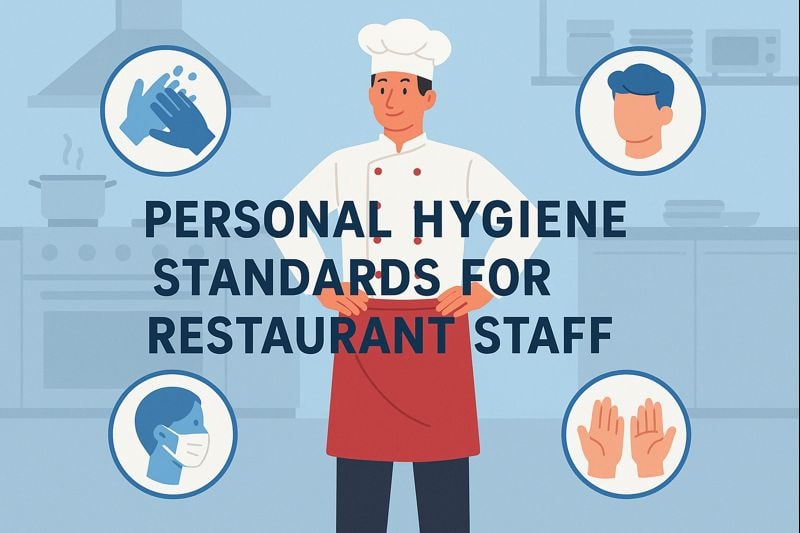
Staff hygiene is one of the most visible food safety essentials every restaurant should follow and one of the most important. The FDA Food Code emphasizes employee health controls and hand hygiene as key interventions to prevent foodborne illness.
Delaware’s Food Code mirroring these requirements expects restaurants to ensure that food workers are healthy, clean, and following consistent hygiene practices.
Poor hygiene can quickly turn an otherwise safe kitchen into a high-risk environment. Viruses like norovirus and hepatitis A, and bacteria such as Staphylococcus aureus, can spread easily when sick employees handle food, touch ready-to-eat items with bare hands, or skip proper handwashing.
To prevent this, Food Safety Essentials Every Restaurant Should Follow around personal hygiene include:
- Robust employee illness reporting and exclusion policies
- Thorough handwashing and glove-use expectations
- Dress code policies that support hygiene (hair restraints, clean uniforms)
- Restrictions on jewelry, nail polish, and artificial nails
By building these essentials into your daily operations, you protect not only your guests but also your staff, who are less likely to be exposed to pathogens and unsafe conditions.
Employee Health Policies and Illness Reporting
The FDA Food Code and Delaware Food Code require that restaurants control employee health, particularly for symptoms linked to foodborne illness such as vomiting, diarrhea, jaundice, sore throat with fever, and infections with specific pathogens.
A strong illness policy is one of the food safety essentials every restaurant should follow. It should clearly define:
- What symptoms must be reported: Vomiting, diarrhea, jaundice, sore throat with fever, certain skin lesions, and diagnosed infections with key pathogens (like Salmonella, Shigella, norovirus, or E. coli).
- Who must be informed: Usually a manager or CFPM who understands when to restrict, exclude, or allow an employee to return to work.
- When to restrict or exclude: For example, employees with vomiting or diarrhea should be excluded from the facility until at least 24 hours after symptoms stop, or as directed by public health guidance.
- When to involve public health authorities: Certain diagnosed illnesses must be reported and may involve coordination with the Delaware Division of Public Health.
Restaurants should provide illness reporting forms or simple written agreements (sometimes modeled after Food Code forms) ensuring employees understand their responsibility to report symptoms and diagnoses.
Looking ahead, more restaurants will use digital tools to track illness logs, health screening questionnaires, and return-to-work approvals.
In a post-pandemic world, guests are highly sensitive to signs of illness in staff, so a well-implemented employee health policy is both a compliance requirement and a visible indicator that you follow Food Safety Essentials Every Restaurant Should Follow.
Handwashing, Glove Use, and Personal Cleanliness
Thorough handwashing is arguably the single most important of all food safety essentials every restaurant should follow.
The FDA Food Code specifies when and how food employees must wash their hands: before starting work, after using the restroom, after handling raw food, after touching their face or body, after handling garbage, and any time hands may have become contaminated.
A Delaware restaurant should ensure:
- Handwashing sinks are conveniently located, fully accessible, stocked with soap, warm water, and disposable towels.
- Handwashing procedures involve using warm water, lathering for at least 10–15 seconds (many standards recommend 20), rinsing thoroughly, and drying with a single-use towel.
- Signage is posted in both English and other languages as needed, reminding staff of handwashing steps and frequency.
Gloves are useful but are not a substitute for handwashing. Food Safety Essentials Every Restaurant Should Follow require:
- Washing hands before putting on gloves and when changing gloves.
- Changing gloves between tasks, especially when moving from raw to ready-to-eat foods.
- Never washing or reusing gloves.
Personal cleanliness policies should cover:
- Clean, appropriate uniforms or clothing
- Hair restraints such as hats or nets
- Restrictions on jewelry that can harbor bacteria or fall into food
- Rules about long nails, nail polish, and artificial nails
In the near future, we are likely to see more touchless faucets, automated soap dispensers, and sensor-based handwashing verification systems in high-volume or high-risk restaurants. These technologies will support the food safety essentials every restaurant should follow by making hand hygiene easier to maintain and document.
Time and Temperature Control for Safety (TCS Foods)
Time and temperature control is a core part of Food Safety Essentials Every Restaurant Should Follow. Many of the pathogens responsible for foodborne illness thrive in the “danger zone” between 41°F and 135°F.
The FDA Food Code and Delaware Food Code emphasize strict limits for cooking, cooling, reheating, and holding foods—especially Time/Temperature Control for Safety (TCS) foods.
Your restaurant must know and apply these limits consistently. This means more than just posting a temp chart on the wall; it means using calibrated thermometers, keeping logs, and training staff to treat temperature checks as non-negotiable food safety essentials.
The 2022 FDA Food Code also updates guidance on using time as a public health control (allowing certain foods to be held without temperature control under strict conditions), as well as refinements to some holding and cooling requirements.
Cooking, Cooling, and Reheating Standards
Cooking destroys harmful pathogens when done correctly, making it one of the most important food safety essentials every restaurant should follow. While specific temperature requirements vary by food type, typical FDA Food Code recommendations include minimum internal temperatures such as:
- 145°F for whole cuts of fish and meat (for a specific time)
- 155°F for ground meats
- 165°F for poultry and stuffed items
These values may be updated or further defined in Delaware’s Food Code and should be confirmed from the current version.
Cooling is another high-risk step. Large batches of hot foods that cool slowly can spend hours in the danger zone, allowing bacterial growth. A common standard (based on FDA Food Code) is to cool from 135°F to 70°F within 2 hours, and from 70°F to 41°F within a total of 6 hours. Restaurants should:
- Divide large batches into shallow pans
- Use ice baths, blast chillers, or ice wands
- Avoid stacking hot pans tightly in coolers
Reheating also has specific requirements—often to at least 165°F for previously cooked and cooled TCS food—before hot holding. This ensures that any bacteria that grew during cooling or storage are destroyed before service.
To make these food safety essentials work in real life:
- Use calibrated digital thermometers and check them regularly
- Build temperature checks into prep lists and line checks
- Document temperatures at critical points (end of cooking, cooling milestones, reheating)
In the future, more Delaware restaurants will rely on connected temperature probes, refrigeration monitoring systems, and automated alerts. These tools will help kitchens adhere to Food Safety Essentials Every Restaurant Should Follow with less manual effort and better documentation.
Cold Holding, Hot Holding, and Time as a Public Health Control
Holding food at safe temperatures is just as important as cooking it correctly. The food safety essentials every restaurant should follow require:
- Cold holding TCS foods at 41°F or below
- Hot holding TCS foods at 135°F or above
These limits are designed to keep foods out of the danger zone where bacteria can multiply rapidly. Delaware’s Food Code, based on the FDA Food Code, reflects these critical thresholds.
Your restaurant should:
- Check and log refrigeration temperatures at least twice per shift
- Use small, shallow pans on the line rather than large deep ones that warm up quickly
- Stir hot-held foods periodically to keep temperatures uniform
- Avoid overfilling cold wells or hot holding equipment
The 2022 FDA Food Code refines guidance on using time as a public health control. Traditionally, certain foods could be held up to four hours without temperature control if they started at 41°F or colder or 135°F or hotter.
Newer guidance allows some ready-to-eat hermetically sealed foods and freshly cut fruits to start at an ambient temperature of 70°F or below, under strict conditions, as long as they do not exceed 70°F within four hours.
If you choose to use time as a control:
- You must have written procedures approved by the regulatory authority where applicable
- Foods must be clearly time-marked and discarded after the specified time
- Staff must be trained to understand that time replaces temperature control, not safety itself
Digitally tracked timers, line display systems, and app-based reminders will increasingly support these practices. Over time, time-based control will become a more common part of Food Safety Essentials Every Restaurant Should Follow, especially for high-volume operations and grab-and-go foods.
Preventing Cross-Contamination and Allergen Exposure
Preventing cross-contamination is another core pillar of Food Safety Essentials Every Restaurant Should Follow. Cross-contamination occurs when pathogens from raw foods, dirty equipment, or the environment contact ready-to-eat food.
The FDA Food Code lists “contaminated equipment” and “food from unsafe sources” among major risk factors.
Delaware’s Food Code requires restaurants to separate raw and ready-to-eat foods in storage, preparation, and service. At the same time, allergen control has become a critical priority, as even small amounts of allergen cross-contact can trigger severe reactions.
Together, these risks make cross-contamination and allergen management essential parts of the food safety essentials every restaurant should follow.
Raw vs Ready-to-Eat Separation and Equipment Controls
To prevent bacterial cross-contamination, restaurants must physically and procedurally separate raw and ready-to-eat (RTE) foods. Food Safety Essentials Every Restaurant Should Follow in this area include:
- Storage hierarchy: Raw poultry at the bottom, then ground meats, then whole cuts, then fish, with ready-to-eat foods at the top—always stored to prevent drips and contact.
- Designated equipment: Color-coded cutting boards, utensils, and containers reserved for specific food types (e.g., red for raw meats, green for vegetables).
- Separate prep areas: Where possible, assign distinct stations or times for raw and RTE prep.
Contaminated equipment is a major cause of foodborne illness. The FDA and Delaware Food Codes require food-contact surfaces to be cleaned and sanitized between uses when switching from raw to ready-to-eat foods.
Your restaurant should:
- Train staff to recognize high-risk transitions, like cutting raw chicken and then slicing deli meat
- Ensure sanitizing buckets or spray bottles are at each station, with test strips to confirm proper sanitizer concentration
- Include equipment cleaning in prep and closing checklists so it doesn’t get skipped during busy periods
In the future, more equipment may be designed with built-in antimicrobial surfaces and easier-to-clean components, and some operations will adopt UV or other non-chemical sanitizing technologies.
Even then, foundational food safety essentials every restaurant should follow—like separation, cleaning, and sanitizing—will remain absolutely necessary.
Allergen Management and Menu Labeling
Food allergies are a growing concern, and allergen control is now one of the Food Safety Essentials Every Restaurant Should Follow. Eight major allergens (and more in some standards) require careful management: milk, eggs, fish, shellfish, tree nuts, peanuts, wheat, and soy.
Some jurisdictions also highlight sesame as an additional major allergen, and labeling regulations are evolving.
For restaurants in Delaware, allergen management should include:
- Ingredient tracking: Keeping up-to-date ingredient lists and supplier labels, especially when recipes or vendors change.
- Menu transparency: Clearly identifying dishes that contain major allergens or can be modified, and training servers to communicate accurately with guests.
- Preparation controls: Using clean, dedicated utensils and equipment for allergen-free orders, washing hands and changing gloves, and using separate fryers where feasible.
- Cross-contact awareness: Teaching staff that allergens can transfer via shared surfaces, oil, or utensils even in tiny amounts.
Consumer advisory statements are another important part of food safety essentials, especially when serving undercooked items like raw oysters, rare burgers, or runny eggs. The FDA Food Code emphasizes consumer advisories as one of its five key interventions.
Looking ahead, it’s likely that allergen labeling on menus and digital platforms will become more standardized and possibly mandated in more detail.
Restaurants that build strong allergen management into their Food Safety Essentials Every Restaurant Should Follow will be better positioned to comply with future regulations and earn the trust of guests with food allergies.
Cleaning, Sanitizing, and Pest Control
A clean kitchen is more than just visually appealing; it is fundamental to Food Safety Essentials Every Restaurant Should Follow. The FDA Food Code and Delaware Food Code require food-contact surfaces and equipment to be properly cleaned and sanitized at specific frequencies and whenever contamination may have occurred.
At the same time, pests such as rodents, cockroaches, and flies can carry pathogens and undermine the effectiveness of other food safety essentials. Delaware’s regulatory framework expects restaurants to maintain facilities in a way that discourages pest activity and allows thorough cleaning.
Effective cleaning, sanitizing, and pest control not only keep your restaurant compliant and safe but also reassure inspectors and guests that you take Food Safety Essentials Every Restaurant Should Follow seriously.
Cleaning vs Sanitizing and Correct Sanitizer Use
One of the most common misunderstandings in restaurant food safety is the difference between cleaning and sanitizing. Cleaning removes visible soil, grease, and food residue. Sanitizing reduces the number of microorganisms on a surface to safe levels. Both are food safety essentials every restaurant should follow.
Key practices include:
- Pre-cleaning: Scrape and rinse surfaces to remove heavy debris.
- Washing with detergent: Use hot water and food-safe detergent to remove remaining residue.
- Rinsing: Rinse to remove detergent, which can neutralize sanitizer.
- Sanitizing: Apply an approved sanitizer at the correct concentration and allow appropriate contact time.
- Air-drying: Let surfaces and utensils air-dry; do not towel dry sanitized surfaces.
Delaware restaurants often use chlorine, quaternary ammonium (quats), or iodine-based sanitizers, all of which must be mixed to the manufacturer’s specifications and tested with test strips. Inspectors routinely check sanitizer solutions and may cite violations if the concentration is too low or too high.
To make sanitizing a practical part of Food Safety Essentials Every Restaurant Should Follow:
- Place properly labeled sanitizer buckets or spray bottles at each station
- Train staff on required concentrations and how to use test strips
- Include wash-rinse-sanitize steps in written SOPs and visual diagrams
- Schedule “clean breaks” during service for wiping down high-touch equipment
In the future, expect more use of automated dishwashing and sanitation monitoring systems, as well as equipment designed for quick disassembly and cleaning. These innovations will support, but not replace, the foundational cleaning and sanitizing food safety essentials in your kitchen.
Facility Maintenance, Waste Handling, and Integrated Pest Management
Pest control is another crucial part of Food Safety Essentials Every Restaurant Should Follow. Pests thrive in environments with accessible food, water, and harborage—conditions often created by poor waste handling or facility maintenance.
Delaware’s Food Code requires restaurants to maintain clean, well-constructed facilities, properly manage garbage and recyclables, and work with pest control professionals when needed.
Best practices include:
- Waste handling: Empty interior trash regularly, keep dumpsters closed and away from doors, and clean receptacles to avoid odors and residue.
- Building maintenance: Seal cracks and gaps, maintain door sweeps, fix leaky plumbing, and prevent standing water.
- Storage practices: Keep food and single-use items at least six inches off the floor and away from walls to allow inspection and cleaning.
- Pest monitoring: Use logs to record pest sightings, actions taken, and follow-up; partner with a licensed pest control company.
Integrated Pest Management (IPM) focuses on prevention and monitoring first, resorting to chemical treatments only when necessary and in compliance with food safety rules. This aligns with the preventive approach of the FDA Food Code and supports the broader food safety essentials every restaurant should follow.
Future trends include smart traps, remote monitoring, and data analytics that help restaurants detect pest issues early. As more technology enters this space, regulators will still expect restaurants to maintain clean, well-kept facilities that reflect their commitment to Food Safety Essentials Every Restaurant Should Follow.
Food Sourcing, Receiving, and Storage
Safe food starts long before it enters your kitchen. Sourcing from approved suppliers, inspecting deliveries properly, and storing food under the right conditions are core Food Safety Essentials Every Restaurant Should Follow.
Delaware’s Food Code regulates food sourcing, transportation, storage, and handling to ensure that contaminated or unsafe products are not served to consumers.
Failing to control these early steps undermines everything you do later with cooking, hygiene, and cleaning. A robust receiving and storage program is essential to your overall food safety essentials strategy.
Approved Suppliers, Receiving Checks, and Rejection Procedures
Delaware expects food establishments to obtain food only from approved sources—licensed suppliers, inspected processors, and legitimate distributors.
Choosing reputable suppliers is one of the earliest food safety essentials every restaurant should follow, reducing the risk of receiving contaminated or mislabeled products.
When deliveries arrive:
- Check temperatures: TCS foods like meats, dairy, and seafood should arrive at appropriate temperatures (commonly 41°F or below for refrigerated items, fully frozen for frozen products).
- Inspect packaging: Look for torn bags, dented or bulging cans, broken seals, and signs of tampering or contamination.
- Evaluate freshness: Assess appearance, smell, and use-by dates, especially for seafood and produce.
- Verify documentation: For certain products, such as shellfish, maintain required tags and records as specified by the Food Code.
If a product doesn’t meet your standards, rejecting it is a key part of Food Safety Essentials Every Restaurant Should Follow. Document rejections in a log and notify your supplier so issues can be addressed.
Looking ahead, more suppliers and restaurants will rely on digital traceability systems, blockchain-based records, and real-time temperature tracking during transport. These innovations will reinforce the food safety essentials around sourcing and receiving, giving restaurants better visibility into the safety of their ingredients.
Storage Hierarchy, Labeling, and Date-Marking
Once food enters your restaurant, Food Safety Essentials Every Restaurant Should Follow requires strict control over how it is stored. Delaware’s Food Code specifies storage conditions designed to prevent contamination and spoilage.
Key practices include:
- Storage hierarchy: As noted earlier, store raw poultry at the bottom, followed by ground meats, whole cuts, fish, and ready-to-eat foods at the top.
- Labeling: Clearly label containers with the product name, date received or prepared, and use-by or discard date.
- Date-marking: Many ready-to-eat refrigerated foods must be date-marked and used or discarded within a specific number of days (often 7, including the day of preparation, depending on regulations).
- FIFO (First In, First Out): Organize storage so that older products are used before newer ones, preventing forgotten items from lingering.
Cold and dry storage areas must be kept clean, well-ventilated, and free from pests and chemical contamination. Avoid storing food under leaking pipes or in areas where chemicals are present.
In the future, smart shelving, automated inventory systems, and temperature-logging sensors will help restaurants track food age, storage conditions, and usage patterns. These technologies will make it easier to maintain Food Safety Essentials Every Restaurant Should Follow while reducing waste and improving profitability.
Inspections, Grading, and Documentation in Delaware
Regulatory oversight is a central part of Food Safety Essentials Every Restaurant Should Follow. The Delaware Division of Public Health conducts routine inspections of food establishments to verify compliance with the State Food Code, and it operates a grading system to communicate inspection results to the public.
Rather than fearing inspections, successful restaurants view them as opportunities to validate their food safety essentials and identify areas for improvement. Maintaining good documentation and proactive communication with inspectors can make inspections smoother and more productive.
Permits, Routine Inspections, and Grading
Every restaurant must maintain a valid Food Establishment Operating Permit issued by the Delaware Division of Public Health. Permit requirements may include plan review, equipment specifications, menu review, and evidence of appropriate sewage, water, and waste management arrangements.
Once operating, your restaurant will undergo routine inspections. Inspection frequency and depth can vary based on:
- Type of operation (full-service, fast casual, commissary, catering)
- Risk profile (extent of food handling, population served)
- Past compliance history and any previous critical violations
Recent legislation in Delaware mandates a grading and classification system for inspection results, helping consumers understand how well a restaurant complies with food safety standards.
A poor grade doesn’t just affect your reputation; it signals that your Food Safety Essentials Every Restaurant Should Follow are not robust enough.
To prepare for inspections:
- Conduct self-inspections using a checklist based on Delaware’s Food Code
- Keep logs and documentation organized and readily available
- Train staff to answer inspector questions clearly and honestly
As digital inspection tools become more common, expect faster public posting of results and more detailed data being available online. Restaurants that maintain strong food safety essentials and documentation will benefit from these trends, as good records and consistent performance are reflected in public-facing grades.
Records, Corrective Actions, and Handling Consumer Complaints
Documentation is one of the most practical Food Safety Essentials Every Restaurant Should Follow. Well-maintained records not only help you manage daily operations but also demonstrate compliance to inspectors and protect your restaurant if issues arise.
Important records include:
- Temperature logs for refrigerators, freezers, and hot holding
- Cooking, cooling, and reheating temperature logs
- Cleaning and sanitizing schedules
- Pest control service reports and IPM logs
- Employee training records and CFPM certificates
- Illness reporting logs and return-to-work documentation
When violations are identified—either by your team or during an inspection—prompt corrective action is essential. Document what went wrong, how it was fixed, and how you will prevent recurrence. This approach shows regulators that you take food safety essentials every restaurant should follow seriously and are committed to continuous improvement.
Consumer complaints are also important. Delaware allows individuals to report concerns about restaurant cleanliness or hygiene directly to the health department. A smart restaurant:
- Has a clear internal process for handling complaints
- Thanks guests for raising issues
- Investigates thoroughly and documents findings
- Takes corrective action and explains it when appropriate
In the future, integrated complaint tracking systems, automated follow-ups, and better data sharing with health departments may become common. Restaurants that already value feedback and use it to strengthen Food Safety Essentials Every Restaurant Should Follow will have a strong advantage.
Future Trends in Restaurant Food Safety
Food safety is not a static field. The Food Safety Essentials Every Restaurant Should Follow are steadily evolving in response to new science, technology, and consumer expectations.
The FDA’s periodic updates to the Food Code—most recently the 2022 edition—reflect changes in risk understanding, allergen science, and practical mitigation strategies.
In Delaware, the State Food Code and regulatory practices will continue aligning with these updates, integrating them into inspections, guidance documents, and enforcement. Restaurants that keep an eye on future trends can adapt early, avoid surprises, and use proactive food safety as a strategic advantage.
Digital Monitoring, IoT, and Automation in Food Safety
Technology is reshaping the Food Safety Essentials Every Restaurant Should Follow. Increasingly, restaurants are adopting:
- IoT temperature monitoring: Sensors in refrigerators, freezers, and hot holding units that continuously log temperatures and send alerts when readings drift out of range.
- Bluetooth or wireless thermometers: Cooking and cooling probes that transmit data directly to apps or management systems.
- Digital checklists and logs: Replacing paper forms with tablets or smartphones, which can prompt staff at the right times and make records easier to review.
- Automated cleaning and sanitizing systems: For dishwashing, warewashing, and some equipment, which help maintain consistent sanitizer levels and temperatures.
These tools make it easier to maintain core food safety essentials every restaurant should follow—like time and temperature control, cleaning schedules, and documentation—while reducing human error and paperwork.
Over the next decade, expect more integration between these systems. For example, inspection reports may connect directly to your digital FSMS, suggesting targeted corrections; AI may analyze temperature and waste data to suggest menu or process changes that improve safety and reduce costs.
Restaurants in Delaware that embrace these technologies will be better equipped to show regulators, insurers, and guests that they are serious about Food Safety Essentials Every Restaurant Should Follow.
Evolving Regulations, Consumer Expectations, and Sustainability
Regulations and consumer expectations are converging around higher standards of transparency, allergen safety, and sustainability. The FDA and state agencies are paying more attention to:
- Allergen labeling and communication
- Food donation and food waste reduction
- Safe use of time as a public health control
- Food defense and intentional contamination prevention
The 2022 FDA Food Code includes updates related to food donation and clarifications on time/temperature control, reflecting a desire to reduce waste while maintaining safety. Delaware, like other states, is likely to continue incorporating such updates into its own Food Code over time.
Consumers are also more informed than ever, often checking inspection grades and online reviews before choosing where to eat. They expect restaurants to follow Food Safety Essentials Every Restaurant Should Follow not as a bare minimum, but as a fundamental part of hospitality.
Sustainability adds another layer. As restaurants move toward local sourcing, reduced plastic use, and energy-efficient equipment, they must ensure that these changes still support core food safety essentials.
For instance, reusable or compostable serviceware needs appropriate cleaning and storage; local sourcing must still comply with approved-source requirements.
In the long run, restaurants that combine strong food safety essentials every restaurant should follow with sustainable practices and transparent communication will be best positioned to thrive in Delaware’s evolving market.
FAQs
Q1. What are the most important Food Safety Essentials Every Restaurant Should Follow in Delaware?
Answer: The most important Food Safety Essentials Every Restaurant Should Follow in Delaware include:
- Maintaining a valid food establishment permit and complying with the State Food Code.
- Implementing a written food safety plan and SOPs covering hygiene, time/temperature control, cleaning, and storage.
- Ensuring at least one Certified Food Protection Manager leads food safety efforts.
- Enforcing strict employee illness reporting and handwashing policies.
- Controlling time and temperature for TCS foods, including cooking, cooling, and holding.
- Preventing cross-contamination and managing allergens effectively.
- Keeping accurate records and responding quickly to inspections and complaints.
These essentials align with the FDA Food Code’s key interventions and Delaware’s regulatory expectations.
Q2. How often do restaurants get inspected, and how can we prepare?
Answer: Inspection frequency in Delaware depends on your restaurant’s risk level and compliance history. Higher-risk operations or those with repeated violations may be inspected more often.
To prepare:
- Conduct regular self-inspections using a checklist based on the Delaware Food Code.
- Ensure logs (temperatures, cleaning, training) are up to date.
- Train staff to follow Food Safety Essentials Every Restaurant Should Follow every day, not just when an inspection is expected.
- Address maintenance issues (e.g., plumbing, lighting, pest exclusion) promptly.
Think of inspections as an external audit of your food safety essentials rather than a surprise test.
Q3. Do we need a Certified Food Protection Manager in our restaurant?
Answer: While specific obligations can vary by jurisdiction and establishment type, the FDA Food Code uses the presence of a Certified Food Protection Manager (CFPM) as a key indicator of a strong food safety culture and demonstration of knowledge.
Delaware’s Food Code similarly emphasizes management knowledge and compliance with food safety requirements.
Having a CFPM is one of the Food Safety Essentials Every Restaurant Should Follow, because:
- It ensures at least one leader understands the Food Code deeply.
- It supports staff training and corrective actions.
- It signals to inspectors that your restaurant is serious about compliance.
Even if not strictly mandated in every scenario, having a CFPM is considered best practice for Delaware restaurants.
Q4. How can we manage allergens effectively in a busy restaurant?
Answer: Allergen management is a critical part of Food Safety Essentials Every Restaurant Should Follow. To manage allergens:
- Maintain up-to-date ingredient lists and supplier labels.
- Identify allergen-containing dishes on your menu or provide clear allergen information on request.
- Train servers to ask follow-up questions and communicate accurately between guests and the kitchen.
- Use dedicated equipment and utensils for allergen-free orders and avoid shared fryers when possible.
- Clean and sanitize food-contact surfaces thoroughly between allergen and non-allergen prep.
Over time, expect more detailed allergen labeling standards and guest expectations. Starting now ensures your restaurant is ready for future changes.
Q5. What documentation should we keep to show we follow Food Safety Essentials Every Restaurant Should Follow?
Answer: Documentation is one of the most practical food safety essentials because it proves your efforts. Key records include:
- Refrigeration, freezer, and hot holding temperature logs
- Cooking, cooling, and reheating logs
- Cleaning and sanitizing schedules
- Pest control reports and IPM logs
- Employee training records and CFPM certifications
- Illness reporting and return-to-work records
- Inspection reports and corrective action logs
Keep these organized and easily accessible so inspectors can quickly see that you follow Food Safety Essentials Every Restaurant Should Follow consistently.
Q6. How do new FDA Food Code updates affect restaurants in Delaware?
Answer: The FDA Food Code is a model that states can adopt or adapt. Delaware’s Food Code is based on an earlier FDA edition and is periodically updated via the state’s regulatory process. The 2022 FDA Food Code introduced changes related to:
- Time as a public health control
- Allergen labeling and consumer advisory clarifications
- Food donation and food defense refinements
Restaurants should monitor Delaware’s Division of Public Health and Office of Food Protection announcements to know when these updates are incorporated into state regulations. Aligning early with FDA updates is a smart way to future-proof your Food Safety Essentials Every Restaurant Should Follow.
Q7. What should we do if a guest reports getting sick after eating at our restaurant?
Answer: If a guest reports an illness potentially linked to your restaurant:
- Take the complaint seriously and gather details (what they ate, when, symptoms, medical care).
- Notify management and your CFPM immediately.
- Review logs and practices around the time of the guest’s visit—staff illness reports, temperatures, and cleaning records.
- Contact the health department if required or if multiple guests report illness. Delaware’s health authorities investigate complaints and outbreaks related to food establishments.
- Cooperate fully with inspectors, implement corrective actions, and document everything.
This approach aligns with Food Safety Essentials Every Restaurant Should Follow and shows regulators and guests that you prioritize safety over short-term image concerns.
Conclusion
For restaurants in Delaware, Food Safety Essentials Every Restaurant Should Follow are not optional extras—they are the foundation of safe, legal, and successful operations.
From personal hygiene and time/temperature control to cross-contamination prevention, cleaning, sourcing, and documentation, every step in your process either reduces or increases risk.
The Delaware Food Code, grounded in the FDA Food Code, provides the regulatory framework, while the Division of Public Health and the Office of Food Protection enforce standards through permits, inspections, and grading.
At the same time, consumers have unprecedented visibility into your inspection records and increasingly expect transparent, trustworthy food safety practices.
By building a robust food safety management system, investing in training and certified managers, embracing digital tools, and staying ahead of regulatory updates, your restaurant can turn food safety essentials every restaurant should follow into a powerful asset.
Instead of scrambling before inspections or reacting to problems, you will be running a kitchen where safety is second nature.