
How to Build a Profitable Food Truck Business
Starting a profitable food truck business is one of the fastest ways to enter the food industry with lower overhead than a traditional restaurant—without sacrificing brand potential. But “lower overhead” doesn’t mean “easy money.”
A profitable food truck business is built on a tight concept, a ruthlessly realistic budget, strong operations, smart locations, and a marketing engine that runs even when you’re parked.
The goal is simple: sell high-demand food with a clean, repeatable workflow while keeping labor, waste, and downtime under control.
When you do that consistently, the profitable food truck business becomes a scalable platform—catering, events, corporate lunch routes, pop-ups, packaged items, and eventually multiple trucks or a small brick-and-mortar.
This guide breaks down everything you need to plan, launch, and grow a profitable food truck business, with modern practices and forward-looking trends (payments tech, online ordering, hybrid kitchen models, and the way customers discover food now).
Define a money-making concept that can scale

A profitable food truck business starts with a concept designed for the truck environment—not just a restaurant menu squeezed into a smaller kitchen. Your concept must be easy to execute, quick to serve, and distinctive enough to earn repeat customers.
The best concepts are built around a strong “crave hook” (signature sauce, regional specialty, viral dessert, bold fusion) plus a format that stays consistent: tacos, bowls, sandwiches, wings, smash burgers, loaded fries, coffee-and-pastry, or a specialty niche like gluten-free comfort food.
A common mistake is overcomplicating the offering. You do not win by having 40 items. You win by having 6–12 items that sell fast, travel well, and are simple to prep. Speed is profitability. If your ticket time is slow, your line collapses, and sales drop even if the food is great.
The second part of scalability is brand clarity. A profitable food truck business needs a name, identity, and positioning that makes sense instantly. When people pass your truck or see your social post, they should understand what you sell in three seconds.
Think in terms of “headline concepts” like “Nashville-style chicken sandwiches,” “Korean BBQ bowls,” or “artisan grilled cheese.” The concept is also your content strategy—every week you want new reasons for customers to talk about your truck.
Finally, test demand before you invest heavily. Run a booth at local markets, do small pop-ups, or partner with a shared commercial kitchen to validate pricing and customer response. The earlier you find the winning concept, the faster you build a profitable food truck business without burning cash.
Build your signature item and your “fast lane” menu
Your signature item is the billboard. It should be photogenic, consistent, and high margin. Then build a “fast lane” menu: limited customization, a short prep path, and ingredients that cross over between items. That crossover is how a profitable food truck business reduces inventory complexity and waste.
Avoid fragile menu items that don’t travel well. Focus on food that holds texture and temperature for at least 10–15 minutes. If you plan to add delivery or pre-orders later, the “travels well” test becomes even more critical.
Price for profit, not for applause
A profitable food truck business prices based on food cost, labor reality, and demand—not competitor envy. In practice, you want a stable margin even when ingredient prices spike. That means building “menu engineering” into your concept: a few premium items, a few high-margin staples, and optional add-ons that raise ticket size without slowing operations.
Build a business plan that actually works in the real world

A business plan for a profitable food truck business is not a school essay. It’s a decision tool. It should answer: how much money do you need, how fast can you sell, what are the top risks, and what specific actions create profit.
Start with your model: daily street vending, lunch route, breweries, late-night, markets, or events. Your model determines your sales pattern. Events can generate big revenue spikes but often require higher fees and tighter logistics.
Regular lunch routes can be consistent but require location access and operational discipline. Many owners use a hybrid approach: consistent weekly stops plus high-profit weekend events.
Then map out your monthly “break-even” numbers. A profitable food truck business needs clear targets: average ticket size, transactions per hour, operating days per month, and gross margin.
Once you have those assumptions, you can compute how many servings you must sell per day to cover fixed costs like insurance, commissary fees, permits, and loan payments.
Also, build a marketing plan with concrete channels. Modern discovery happens on short-form video, maps, and community groups. Your plan should include weekly content, daily location posting, partnerships, and a simple loyalty strategy.
Lastly, put your growth plan in the plan: catering packages, corporate accounts, brand collaborations, and a second unit roadmap.
Choose your revenue lanes: street sales, events, catering, and pre-orders
A profitable food truck business rarely relies on just one lane forever. Street sales are great for branding and repeat customers. Events bring volume but can be seasonal. Catering can be the highest-margin lane because you control pricing, quantities, and workflow.
Pre-orders are becoming a profit multiplier. You can sell out before you even arrive. It reduces waste, makes labor predictable, and improves ticket time. If you want future-proofing, build pre-orders into your strategy from the beginning.
Write a lean operations plan (so your plan survives reality)
Your plan must include staffing, prep schedule, cleaning, storage, supplier ordering cadence, and emergency backups. A truck breaks. A generator fails. A staff member calls out. A profitable food truck business survives because it plans for failure and builds redundancy.
Budgeting and startup costs without getting trapped by debt

One reason people chase a profitable food truck business is the startup cost can be lower than a full restaurant—but it can still be substantial depending on your build.
In 2026 cost discussions, guides commonly emphasize that truck choice (used vs. custom) and equipment decisions drive the biggest differences, along with permitting and ongoing operating expenses.
Start by separating one-time costs from monthly costs. One-time costs include the truck purchase/build, wrap/branding, initial equipment, licensing setup, and initial inventory. Monthly costs include commissary or kitchen fees, insurance, fuel, propane, phone/internet, software subscriptions, and maintenance reserves.
A profitable food truck business is built on cash flow, so do not max out your budget on the truck alone. You need working capital. Many first-time operators underestimate how much cash they need to float payroll and inventory until sales stabilize. Your goal is to avoid panic decisions (discounting, menu chaos, skipping maintenance) that kill profit.
Set a maintenance reserve from day one. Trucks live hard lives—heat, vibration, heavy electrical loads, constant movement. If you don’t budget for repairs, the first breakdown can erase weeks of profit.
How to buy the right truck: used, pre-built, or custom
Used trucks can shorten your launch timeline, but they can hide mechanical and compliance issues. Pre-built units can be a middle ground.
Custom builds can match your workflow perfectly, but lead times can be months and costs can rise. Startup cost guides highlight that build timelines and customization can materially affect launch speed and budget.
Whatever you choose, inspect professionally. A profitable food truck business doesn’t start with a “project truck” unless you have deep mechanical experience and time.
Financing: loans, equipment financing, leasing, and partners
Be cautious with financing. Debt is not evil, but it reduces flexibility. If you finance, match the loan term to the useful life of the asset. Keep your monthly payment low enough that a slow month doesn’t threaten survival.
For many owners, a smaller truck plus a stronger working capital buffer produces a more stable profitable food truck business than a dream built with thin cash.
Legal setup, permits, and food safety compliance
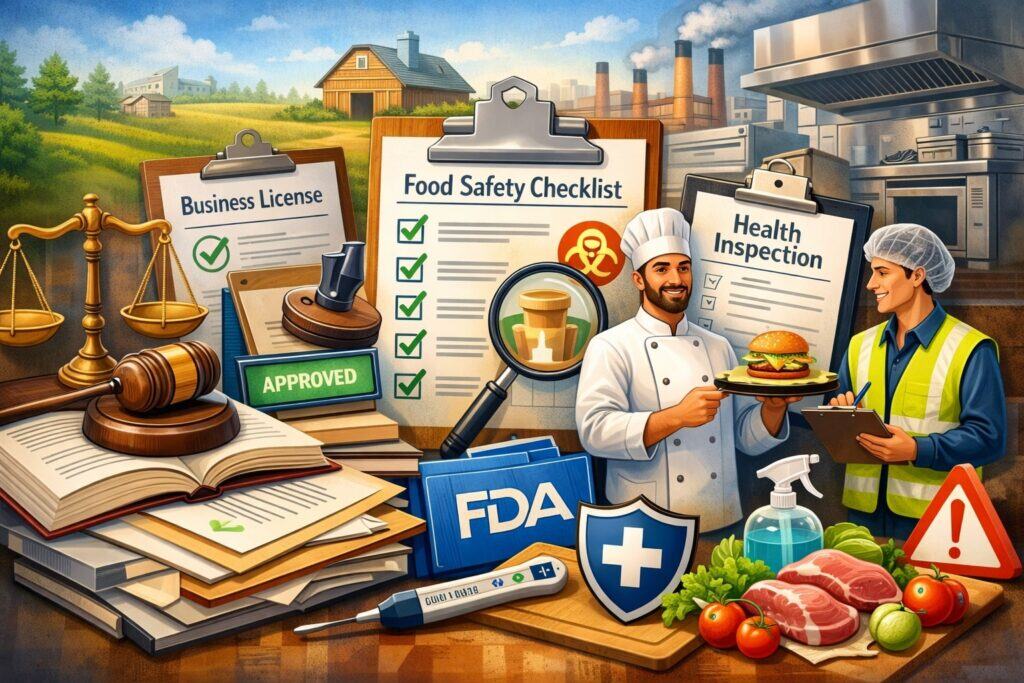
Compliance is not glamorous, but it protects your business and unlocks better locations and events. A profitable food truck business treats compliance like a competitive advantage: clean paperwork, strong inspections, and predictable processes.
Rules vary by state, county, and city. Many jurisdictions align with the FDA Food Code model, and the FDA maintains a state-by-state reference for retail and food service code adoption. That doesn’t replace local requirements, but it helps you understand the framework regulators follow.
You may also need a commissary arrangement—a licensed kitchen where you store food, prep, dispose of wastewater, or wash dishes. Some state guidance for mobile facilities explicitly ties commissary use to licensing requirements.
Beyond health permits, plan for business registration, sales tax setup, fire inspections (especially propane systems), and parking/vending permissions. Local rules can include proximity restrictions, hours, and special event permitting, so you must check your city and county ordinances carefully.
Choose the right business structure and protect yourself
Most operators choose an LLC for liability and simplicity, but consult a qualified professional for your situation. The main point is: a profitable food truck business is still a business. Separate accounts, clean bookkeeping, written agreements with partners, and proper insurance.
Food safety systems that reduce risk and increase speed
Build a simple HACCP-style mindset even if not formally required: time/temperature control logs, cleaning checklists, storage labeling, allergen controls, and consistent receiving practices. The “future-proof” move is training and documentation—because as you grow, consistency becomes your brand.
Design operations for speed, consistency, and low waste
If you want a profitable food truck business, your operations must be engineered. Profit is not only marketing. Profit is flow.
Start with your truck layout and workflow. Where does prep happen? Where are proteins held? Where do you assemble? Where do orders enter? Where do you hand off? Every extra step adds time.
Every time you turn around or cross paths, you reduce throughput. Map your process and design your station roles: griddle/fry, assembly, expo/window, and runner (in high-volume events).
Then standardize recipes and portioning. Portion control is non-negotiable. A profitable food truck business uses scales, ladles, scoops, and clear build sheets. If your staff “eyeballs” portions, your margins disappear.
Also, optimize your prep schedule. Prep-heavy menus can work, but only if you batch intelligently and maintain cold-chain discipline. Build “prep blocks” in the commissary and keep the truck for finishing and service, not complicated prep.
Finally, track waste. Waste comes from over-prep, wrong purchasing, spoilage, and order mistakes. A profitable operator reviews waste weekly and adjusts quantities.
Build a prep system that keeps you in stock but not overstocked
Inventory discipline is the difference between a hobby and a profitable food truck business. Use par levels. Know what you sell per hour. Know what you sell in each location. Different locations have different customer mixes—your “top sellers” may change depending on the crowd.
Staffing and training without turning payroll into a monster
Labor can destroy profits if unmanaged. Start lean: cross-train staff, define roles, and build scripts for common customer interactions. Your goal is calm speed. A profitable food truck business runs like a production line during rush, then resets cleanly.
Location strategy: where the money really is
You can have amazing food and still fail if you park in low-traffic, low-intent locations. A profitable food truck business thinks like a retailer: foot traffic, visibility, convenience, and the right customer at the right time.
Build a weekly route with purpose. Lunch should target offices, warehouses, and business parks. Evening can target breweries, family neighborhoods, and community events. Late-night works near entertainment zones—if local rules allow. Weekends are for markets, festivals, private parties, and catering.
Negotiate partnerships. Breweries, apartment complexes, gyms, and coworking spaces can become predictable stops. Property owners like reliable vendors who show up on time, keep the area clean, and communicate well. Be that vendor and you’ll get invited back.
Track performance by location. Sales data plus note-taking is powerful. You’ll discover that one “good-looking” spot underperforms while a less glamorous spot prints money.
How to evaluate a location quickly (without guessing)
Use a repeatable checklist: parking logistics, foot flow, nearby competition, customer wait tolerance, and weather exposure. Consider whether customers can easily eat nearby. A profitable food truck business reduces friction: simple parking, clear signage, easy ordering, fast pickup.
Event math: fees, minimum sales, and hidden costs
Events can be highly profitable or a trap. Count everything: vendor fees, commissary hours, travel time, extra labor, extra propane, and the risk of weather. Set a minimum revenue threshold before you say yes. Your time is valuable.
Build marketing that drives repeat customers, not just likes
A profitable food truck business is not built on one viral post. It’s built on a repeatable local marketing engine. Your goal is to make it easy for people to find you, trust you, and come back.
Start with the basics: consistent branding on the truck, clear menu board, and a strong online presence that shows your current location and hours. Customers hate guessing. Post your schedule in the same place every week. Pin it. Put it in your bio. Put it on your Google Business Profile and social profiles.
Then create content that matches how people search. Short videos showing the signature item being made. Customer reactions. Behind-the-scenes prep. Location “roll-in” clips. Limited-time specials. Community collaborations. Keep content simple and frequent.
Loyalty is crucial. A profitable food truck business should have a straightforward loyalty method: digital punch card, phone number lookup, or QR-based rewards. The goal is to turn occasional customers into weekly customers.
Local SEO for food trucks: the hidden growth lever
Local search can drive consistent traffic. Encourage reviews. Post photos regularly. Keep your business info accurate. Share weekly “posts” with your updated schedule. A profitable food truck business benefits from high trust signals: reviews, consistent updates, and clear menus.
Partnerships that multiply exposure
Partner with local creators, gyms, breweries, schools (where allowed), and community orgs. Co-branded menu specials make marketing easier. Every partner gives you a new audience without paid ads.
Payments, POS, and tech systems that increase profit
A profitable food truck business needs modern payment acceptance—fast, reliable, and built for outdoor conditions. Tap-to-pay and digital wallets reduce transaction time and can boost conversion in busy lines. Many POS providers now market features specifically for food trucks, including mobile order management and sales tracking.
The tech goal isn’t to be fancy. It’s to be efficient: reduce order mistakes, speed up checkout, capture customer data, and track your real margins. Your POS should support modifiers without creating chaos, and it should handle offline scenarios if your signal drops.
Hardware matters too. Portable handheld devices designed for quick-service environments have been expanding, supporting tap-to-pay and mobile workflows. For a truck, portability and durability are practical advantages—especially during events where you might want a second checkout point.
Also consider online ordering and pre-orders. Even if you don’t deliver, pre-orders let you smooth demand and reduce line pressure. A profitable food truck business uses tech to protect peak-hour throughput.
Data you should track weekly (or you’re flying blind)
Track: best-selling items, profit by item, average ticket size, transactions per hour, refund/mistake rate, labor percentage, and waste. Data turns emotion into decisions.
Future trend: hybrid models and “virtual brands”
Food businesses are experimenting with hybrid kitchen models that support delivery and takeout, and many operators combine mobile vending with shared kitchens or delivery-focused setups. Industry discussions show these models evolving rather than disappearing.
For your profitable food truck business, the practical takeaway is: build a concept that can be served from the truck and scaled into catering, pop-ups, or limited delivery without breaking quality.
Profit engineering: margins, menu design, and cost control
A profitable food truck business is built on numbers. You should know your target food cost percentage, labor percentage, and the margin profile of every menu item.
Start with food cost control. Standardize recipes. Use consistent suppliers. Weigh portions. Negotiate pricing once you have steady volume. Avoid ingredients that cause spoilage unless they are core to your concept. Cross-utilize ingredients across items. That reduces waste and reduces “dead inventory.”
Then engineer the menu for margin. Identify “stars” (high profit, high demand), “plowhorses” (lower profit, high demand), “puzzles” (high profit, low demand), and “dogs” (low profit, low demand). Promote stars, rework puzzles, and remove dogs. A profitable food truck business is willing to cut items even if the owner personally loves them.
Control labor by simplifying steps. The best profit move is reducing complexity, not squeezing wages. Design menu builds that require fewer touches. Use pre-portioned components. Add-ons should be easy to execute.
Raise average ticket size without slowing the line
Use strategic add-ons: upgraded sides, premium toppings, drinks, dessert, combo bundles. Train staff to recommend one add-on naturally. A profitable food truck business grows profit by increasing ticket size while keeping service time fast.
Protect margin against price spikes
Build “pricing flexibility” with seasonal items and rotating specials that let you adapt to ingredient costs. The future trend is more volatility, not less—so design your menu to adjust.
Growth strategies: from one truck to a real brand
Once your profitable food truck business is stable, growth becomes a choice. The smartest growth is usually not “buy a second truck immediately.” It’s building higher-margin revenue streams first.
Catering is often the best next step. Create clear packages (per-person pricing, minimums, travel fees, service styles). Make booking easy with a simple form, photos, and a tight response process. Corporate catering can become predictable recurring revenue.
Then consider product expansion: bottled sauces, spice blends, frozen items, or merch. These deepen your brand and create off-truck revenue. Next, build team leadership—shift leads, training systems, and checklists—so the business doesn’t rely on you every hour.
If you expand to a second unit, replicate what works: same menu systems, same prep routines, same brand standards. A profitable food truck business scales by repeating excellence, not reinventing weekly.
Build systems so the business doesn’t depend on you
Document recipes, prep lists, ordering procedures, opening/closing checklists, cleaning routines, and customer service standards. The more you document, the easier it becomes to hire and grow.
Future prediction: tech-driven loyalty, faster payments, and more pre-orders
Expect more customers to prefer tap-to-pay and digital wallets, more demand for pre-orders, and more competition for premium locations. Your advantage will be speed, consistency, and community presence—plus a marketing engine that is always on.
Frequently Asked Questions
Q.1: How long does it take to build a profitable food truck business?
Answer: A profitable food truck business can become stable within a few months if you launch with a validated concept, strong locations, and disciplined operations. The timeline depends on your model.
High-volume event strategies can reach profitability quickly but can be inconsistent. Weekly routes build slower but can be more predictable. The biggest time factor is operational learning: dialing in prep quantities, reducing mistakes, and finding the best locations.
You can shorten the path by testing the menu before the truck is fully built, creating partnerships early, and building a schedule customers can rely on. The fastest operators focus on a tight menu, strong signage, and consistent weekly stops.
Profit often increases dramatically after the first 60–90 days as the workflow becomes smoother and customer recognition grows.
Q.2: What is the biggest mistake that prevents a food truck from being profitable?
Answer: The biggest killer of a profitable food truck business is operational complexity. Too many menu items, inconsistent portions, slow service, and weak inventory control destroy margins and limit sales volume.
The next most common mistake is poor location strategy—parking where customers aren’t ready to buy, or relying on “hope traffic.”
Another costly mistake is underpricing. Many owners price for popularity instead of profit, then struggle with rising ingredient costs and labor. If you want a profitable food truck business, price based on real costs and the value you deliver, and protect your margins with a smart menu design.
Q.3: Do I need a commissary kitchen?
Answer: Many areas require a commissary or licensed base kitchen for storage, prep, dishwashing, and wastewater disposal—especially for units that can’t handle all functions on the truck. Some state-level guidance for mobile facilities connects commissary use to licensing requirements.
Even when not strictly required, a commissary can make your profitable food truck business easier to run by giving you space for prep, storage, and cleaning. It can also improve food safety systems and simplify inspections.
Q.4: How do I choose the best locations?
Answer: Start with your ideal customer and their routine. Lunch works well near workplaces. Evening works near community gathering spots. Weekends are built for events and markets. Test locations with a small schedule, track results, and double down where repeat sales are strongest.
A profitable food truck business also builds location partnerships. Breweries, apartment complexes, and corporate properties can become recurring stops. The key is reliability: show up on time, communicate clearly, keep the area clean, and deliver consistent quality.
Q.5: Should I offer delivery?
Answer: Delivery can help, but it can also harm if your menu doesn’t travel well or if delivery disrupts your on-truck service speed. Many operators do better with pre-orders for pickup rather than full delivery. A profitable food truck business should adopt delivery only if it protects margins and doesn’t break operations.
If you do explore delivery, consider a hybrid approach—limited delivery windows on slower days, or using a shared kitchen model for delivery-focused production. Industry discussions show hybrid models continuing to evolve.
Conclusion
A profitable food truck business is built, not wished into existence. The winning formula is consistent: a focused concept, disciplined budgeting, strong compliance, engineered operations, smart locations, and marketing that drives repeat customers.
When your service is fast, your portions are consistent, your schedule is predictable, and your brand is clear, profit becomes a predictable outcome instead of a lucky month.
If you want the shortest path to a profitable food truck business, do these five things relentlessly: keep the menu tight, track your numbers weekly, prioritize high-intent locations, train for speed and consistency, and build multiple revenue lanes (street sales plus catering or events).
Then use modern payment and ordering tools to reduce friction and increase throughput, because speed and convenience matter more every year.