Best POS Systems for Restaurants
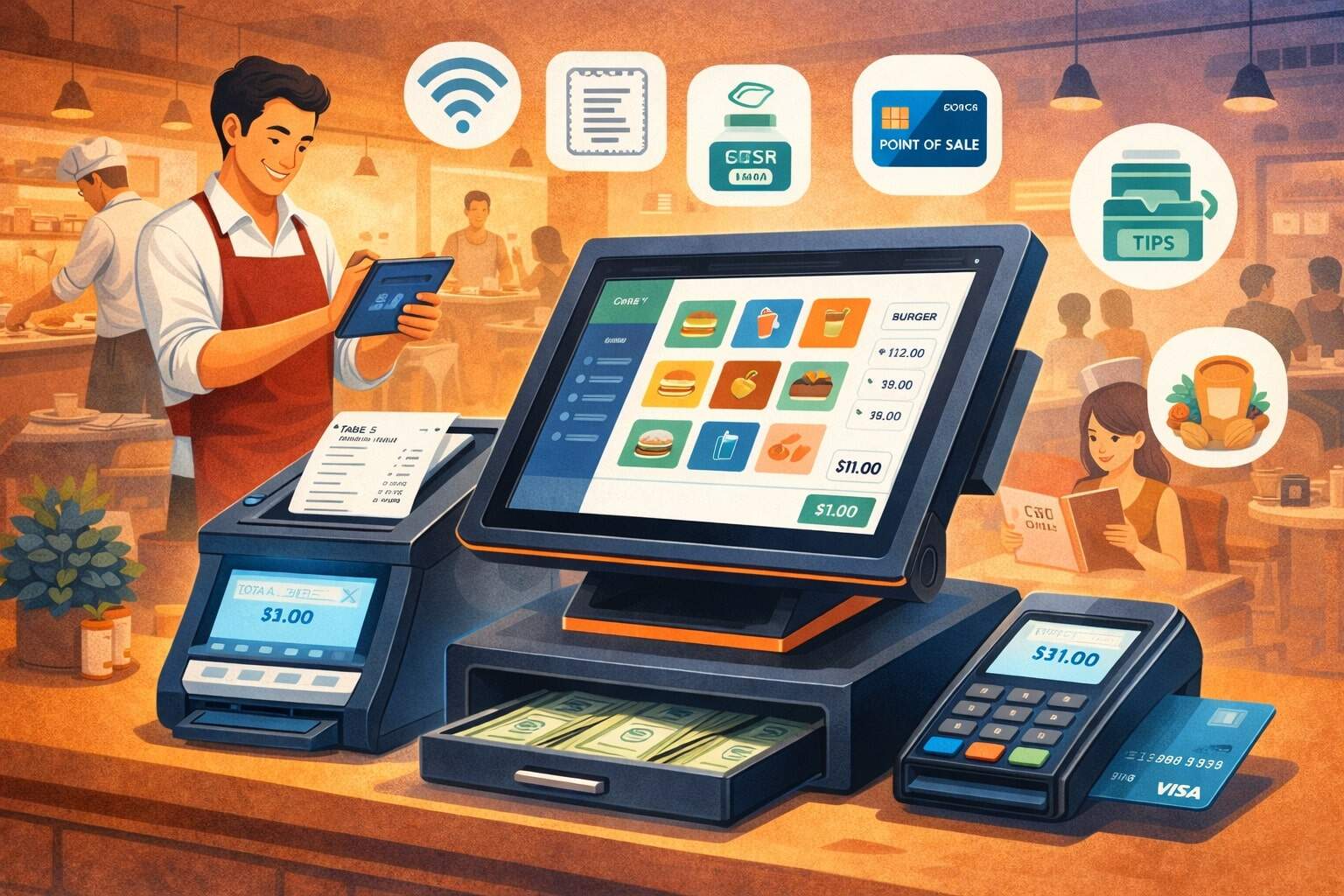
Picking the best POS systems for restaurants is no longer just about taking payments. A modern POS system is the operating system of your restaurant: it controls order flow, connects the front of house to the kitchen, manages menus across channels, tracks labor, reports profitability, and helps you keep guests coming back.
When the POS system is right, service feels smooth, lines move faster, tickets stop getting lost, and managers can make decisions with real data instead of guesses. When it’s wrong, you’ll feel it in every shift—slow checkouts, printing issues, missing modifiers, inventory surprises, and staff frustration.
In 2026, the best POS systems for restaurants are increasingly “connected” systems. That means built-in online ordering, delivery integrations, handheld ordering at the table, kitchen display systems (KDS), loyalty, and automated marketing—often in one ecosystem.
Many restaurants also want flexibility: the ability to add locations, run a bar program, support catering, handle complex tip and split checks, and integrate with accounting, payroll, and scheduling tools.
That’s why the best POS systems for restaurants are judged on more than price—uptime, ease of use, support quality, and workflow fit matter just as much.
This guide breaks down how to evaluate the best POS systems for restaurants, which platforms tend to win for different restaurant types, what features actually move the needle, and what future trends will shape restaurant tech next.
What “Best POS Systems for Restaurants” Really Means
The phrase best POS systems for restaurants can mean different things depending on how your restaurant operates. A counter-service burger spot and a full-service steakhouse can both be “restaurants,” but their POS needs are worlds apart.
In 2026, “best” usually means the system fits your service model, protects your margins, and scales without forcing a painful replacement later.
For quick-service and fast-casual restaurants, the best POS systems for restaurants prioritize speed: fast order entry, smart modifiers, easy menu changes, kiosk support, and tight kitchen routing.
For full-service dining, the best POS systems for restaurants need strong table management, coursing, seat-level ordering, split checks, tip workflows, and handheld devices that reduce server trips.
Bars care about tabs, fast pours, open checks, and durable hardware. Multi-location operators care about centralized menu control, enterprise reporting, and role-based permissions.
The biggest shift is that the best POS systems for restaurants are now expected to support omnichannel sales. Guests want the same menu and experience whether they order at a table, online, or through pickup.
A modern POS system should sync menus and pricing across channels and keep your reporting consistent, so you can see which items drive profit and which channels actually produce repeat customers.
Finally, the best POS systems for restaurants are judged by “operational resilience.” Can it keep taking orders if the internet blips? Can it handle peak volume on a holiday weekend? Does it offer reliable support during service hours? These are the moments that separate a good platform from a painful one.
How to Choose the Best POS Systems for Restaurants
Choosing among the best POS systems for restaurants should feel like selecting a workflow partner, not just a software subscription.
Start by mapping your real service steps: how orders come in, where they go, how they’re fulfilled, and how payments close out. The right POS system will match your flow; the wrong one will force your team to “work around” it.
A practical way to evaluate the best POS systems for restaurants is to score each option in five areas:
- Service fit: Does it handle your model (counter service, full service, bar tabs, drive-thru, food truck, catering)?
- Menu complexity: Can it manage modifiers, combos, half/half items, coursing, timed pricing, and multiple menus?
- Kitchen execution: Does it support KDS, routing by station, expo workflows, and clear ticket design?
- Payments and reliability: Does it support contactless, EMV, offline mode (where available), and stable hardware?
- Reporting and scaling: Can you track prime costs, labor, voids/discounts, and location performance?
You’ll also want to look at the integration ecosystem and support. Many restaurants prefer platforms that offer built-in tools (online ordering, loyalty, gift cards) because fewer vendors usually means fewer points of failure.
That’s why the best POS systems for restaurants often come from providers with strong restaurant focus and established partner networks. Lists from business software reviewers commonly highlight platforms like Toast, Square, Clover, Lightspeed, TouchBistro, and SpotOn among leading restaurant POS options.
When you demo the best POS systems for restaurants, test with your actual menu and real scenarios: split checks, discounts, voids, comps, happy hour pricing, and delivery/pickup routing.
If a vendor can’t smoothly demonstrate your top 10 daily workflows, it’s not one of the best POS systems for restaurants for your operation—no matter how pretty the interface looks.
Core Features Every Restaurant POS System Should Have
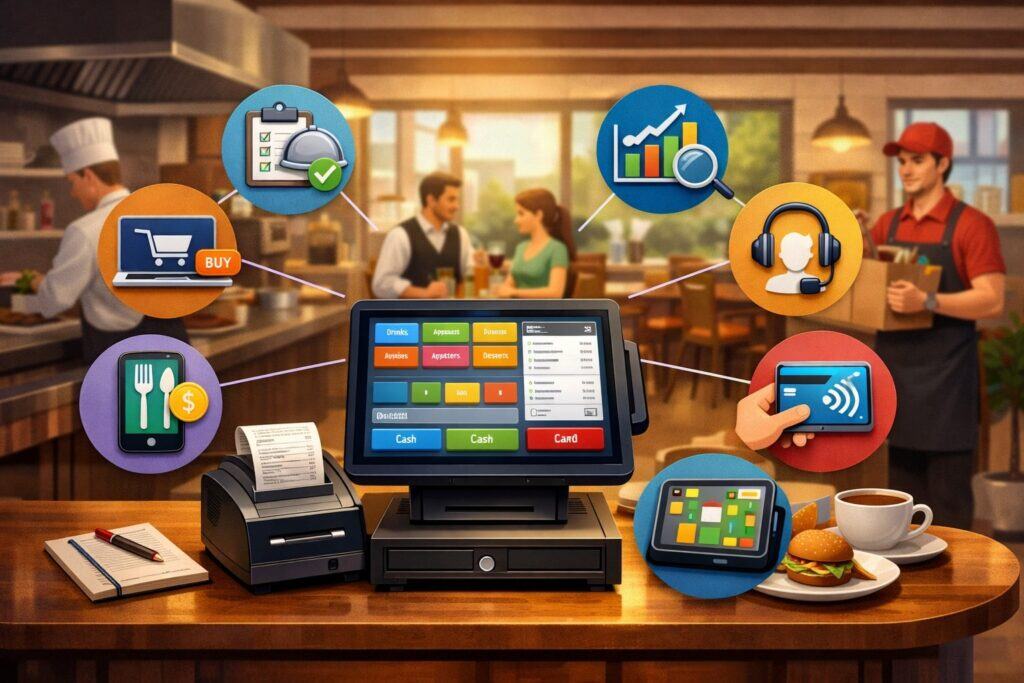
Even among the best POS systems for restaurants, features can be packaged differently—some are included, others are add-ons. The key is knowing what’s “must-have” for your business and what’s “nice to have.” In 2026, certain capabilities are no longer optional if you want to run efficiently.
First, order management must be fast and accurate. That means customizable modifier screens, suggested upsells, item notes, and the ability to route tickets to different kitchen stations.
Second, you need strong payment handling: EMV, contactless, digital wallets, refunds, tips, and flexible split payments. Third, staff tools matter: roles, permissions, time clock, and audit logs to reduce losses from void abuse or unauthorized discounts.
Kitchen tools are where many of the best POS systems for restaurants create serious operational impact. KDS screens reduce printer jams and improve speed of service. Well-built coursing tools help avoid sending entrées before appetizers are finished. Expo screens can improve accuracy and reduce remakes, especially during peak volume.
Reporting is the next non-negotiable. The best POS systems for restaurants should show sales by channel, item profitability clues (at least contribution-level insights), discount/void tracking, staff performance, and trend reporting by hour/day.
Finally, omnichannel support is now core: online ordering, QR ordering, and delivery integration are increasingly standard expectations for the best POS systems for restaurants, not luxury extras. Many current “best of” lists emphasize these operational features as key reasons certain platforms rank highly.
Best POS Systems for Restaurants by Restaurant Type
There isn’t one universal winner. The best POS systems for restaurants are the ones that match your specific service model and growth plans. Below are the common categories where restaurants most often see the biggest differences.
For fast casual and counter service, platforms that excel usually provide quick order entry, smart menus, strong pickup workflows, and easy labor tools. For full-service dining, table mapping, coursing, seat-level orders, and handhelds matter most.
For bars and nightlife, tabs, fast reopen/close flows, and durable hardware are priorities. For multi-location operators, centralized reporting, enterprise permissions, and consistent menu governance often decide what is truly among the best POS systems for restaurants.
Many reviewers highlight Toast and Square as strong picks in multiple restaurant categories, while Clover, Lightspeed, TouchBistro, and SpotOn are frequently recommended for specific needs like customization, add-on flexibility, and multi-location scaling.
The practical takeaway: define your “non-negotiable workflows,” then choose from the best POS systems for restaurants that demonstrate those workflows cleanly. If you pick based only on a headline price, you risk paying more later through inefficiency, staff turnover, or an early platform switch.
Toast Restaurant POS: Why It’s Often Considered One of the Best POS Systems for Restaurants
Toast is widely positioned as a restaurant-focused platform, and it often appears on shortlists of the best POS systems for restaurants because it was designed around restaurant workflows rather than general retail.
Operators often choose it for kitchen execution tools, handheld ordering, menu management, and the ability to run counter service and full service with strong restaurant logic.
Where Toast tends to shine is the “end-to-end restaurant stack.” Restaurants that want a single ecosystem—POS, online ordering, loyalty, gift cards, KDS, reporting—often prefer a platform like this because it reduces vendor sprawl. That matters when you’re troubleshooting during a dinner rush: fewer integrations can mean fewer failure points.
Cost is a real consideration. Pricing and bundles can vary based on configuration, hardware, processing, and add-ons. Public-facing pricing discussions and industry pricing breakdowns commonly describe software costs that can land in the low hundreds per month for many single-location setups depending on features and devices, plus hardware and processing variables.
That’s why the best POS systems for restaurants aren’t “cheapest”—they’re the best value for your workflow and volume.
Toast tends to be a strong fit for restaurants that care about speed, accuracy, and kitchen coordination—especially if they want handhelds, KDS, and a unified guest experience across dine-in and pickup.
If you’re scaling locations or managing complex menus, Toast is often evaluated as one of the best POS systems for restaurants because it supports growth without forcing a full rebuild.
Square for Restaurants: A Flexible Contender Among the Best POS Systems for Restaurants
Square for Restaurants is frequently considered among the best POS systems for restaurants for operators who want a simple start, transparent onboarding, and the ability to scale features over time.
Many restaurants begin with entry-level tools and then add upgrades like advanced reporting, team management, and more sophisticated service features as the business grows.
Square’s big advantage is accessibility and ecosystem breadth. If you’re running a small café, food truck, or quick-service concept, getting live quickly matters.
Square’s pricing and plan structure are published on its site and are designed to let restaurants choose a plan based on feature needs rather than forcing a one-size-fits-all package. That transparency can make it easier to budget compared with platforms that require custom quotes for almost everything.
Square can also be attractive if you sell beyond the dining room—like catering, merchandise, or market events—because Square’s broader tools can support different selling contexts without needing a separate platform. For many operators, that flexibility is part of why it’s shortlisted as one of the best POS systems for restaurants.
The key is fit. Square is often an excellent match for smaller and mid-sized concepts, and reviewers regularly highlight it as a strong option for both quick-service and full-service restaurants, depending on configuration.
If your restaurant needs deep enterprise controls or extremely complex kitchen routing, you’ll want to demo those workflows carefully. But for many operators who want a reliable system with a wide ecosystem and clear pricing, Square remains one of the best POS systems for restaurants to evaluate.
Lightspeed Restaurant POS: Customization and Control for Restaurants That Need More
Lightspeed Restaurant POS often gets attention among the best POS systems for restaurants when operators want a highly configurable system and are willing to invest time in setup to match their exact workflow.
This can be appealing for restaurants with complex service styles, detailed menu logic, or multi-layered reporting needs. Lightspeed is commonly described as iPad-based and customizable, with a wide range of features and add-ons for different restaurant types.
A major value point for Lightspeed is the ability to tailor the experience. Restaurants that want specific floor plan behavior, course timing control, modifier logic, or detailed permissions often like systems that don’t force a rigid “default flow.”
That customization can also extend to reporting and integrations, depending on the package and deployment.
Pricing and hardware transparency can vary by provider and plan. Lightspeed publishes a pricing page, but some reviews note that hardware costs may not be as straightforward as a simple “starter bundle” in every case.
This doesn’t mean it’s a bad option—many of the best POS systems for restaurants require thoughtful quoting because restaurant needs differ—but it does mean you should request a complete cost picture early: software, devices, terminals, printers, KDS screens, installation, and support levels.
Lightspeed can be an excellent option for operators who want more control and are comfortable with a more “configured” setup process. If you’re the type of operator who wants to tune every part of service flow, that’s a major reason Lightspeed can land on a list of the best POS systems for restaurants.
Clover, TouchBistro, SpotOn, and Other Strong Options to Compare
Beyond the “big names,” many operators find their best fit among other platforms that regularly appear in best POS systems for restaurant roundups. These include Clover, TouchBistro, SpotOn, and others that serve specific restaurant profiles well.
Clover is often considered because of hardware variety and the ability to build around an app marketplace—useful if you want to tailor your system with add-ons. It’s frequently mentioned in “top POS platforms” comparisons and restaurant POS lists, especially for operators who want flexible hardware and a configurable ecosystem.
The experience can depend heavily on your reseller/partner and the processing setup, so it’s important to vet support quality and contract terms carefully when judging whether it’s among the best POS systems for restaurants for your business.
TouchBistro is often discussed as a restaurant-friendly iPad POS with strong table and menu tools, and it’s commonly highlighted for customization and inventory-style capabilities in reviews that compare restaurant platforms. TouchBistro can be a strong fit for full-service operations that want a restaurant-first interface and robust dining room workflows.
SpotOn is frequently highlighted for its add-on feature variety and restaurant-specific capabilities in business software reviews. It can be attractive for operators who want a comprehensive system with marketing and operational tools under one roof.
The real point: the best POS systems for restaurants aren’t limited to two brands. The best approach is to shortlist 3–5 platforms, run structured demos using your busiest workflows, then compare total cost and support reliability—not just feature checklists.
Total Cost Breakdown: What the Best POS Systems for Restaurants Really Cost
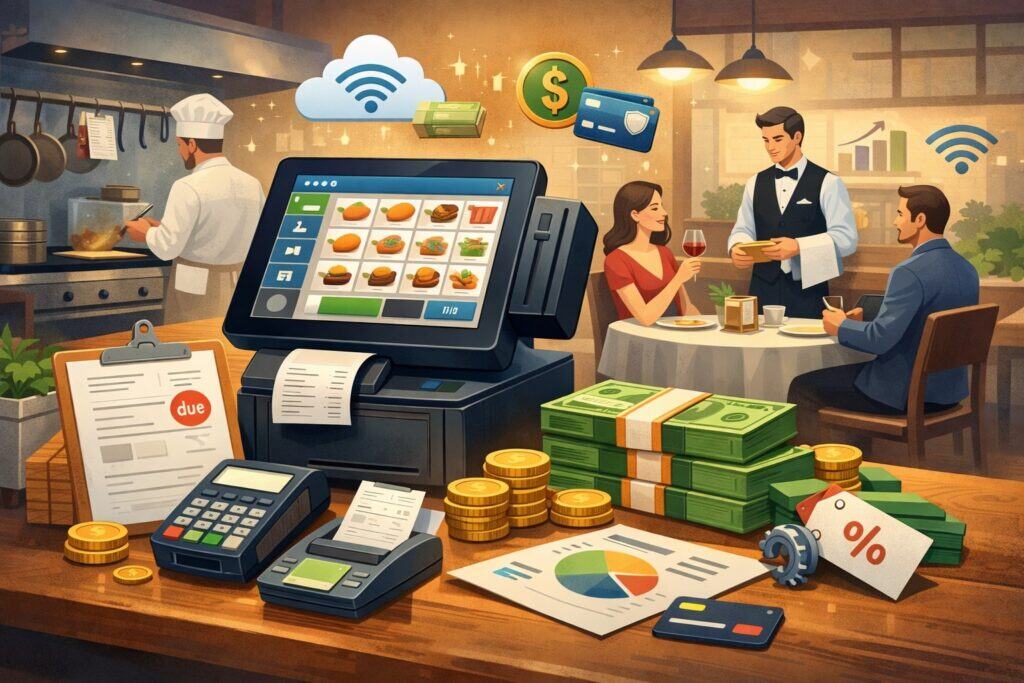
Restaurants often underestimate total cost because they only look at software subscription pricing. But the best POS systems for restaurants typically involve a full stack of costs: software plans, payment processing, hardware, accessories, add-on modules, implementation, and sometimes installation or menu build support.
Software pricing structures vary. Some providers publish restaurant plan pricing directly (like Square’s restaurant plan page), while others use bundles or custom quotes based on devices and feature sets.
For Toast, public pricing discussions and vendor pages show that multiple plan types may exist, and monthly software costs can vary significantly based on configuration and add-ons.
Hardware is the second big cost driver. Restaurants may need fixed terminals, handhelds, cash drawers, receipt printers, kitchen printers, KDS screens, and network equipment.
On top of that, you’ll want backup planning—battery backups, redundant internet options, and spare printers—because the cost of downtime during service can dwarf the monthly software fee.
Processing rates also matter, and they’re often where “cheap software” becomes expensive over time. Even small differences in effective processing costs can add up dramatically at scale.
When evaluating the best POS systems for restaurants, ask each vendor for an “all-in effective cost” estimate based on your expected monthly card volume, average ticket size, and payment mix (card-present vs. online). Then compare that to the operational benefits the POS system provides: reduced labor, fewer errors, faster table turns, or higher upsells.
The best POS systems for restaurants are usually not the lowest sticker price. They’re the systems that deliver the best operational ROI—saving minutes per ticket, preventing mistakes, and increasing revenue through smoother guest experiences.
Future Prediction: Where Restaurant POS Is Headed Next
The next generation of best POS systems for restaurants will look more like intelligent operating platforms than simple transaction systems. Several trends are already shaping product roadmaps in 2026 and are likely to accelerate.
1) AI-assisted operations and smarter menus
Expect more “assistant” features that recommend staffing levels, flag unusual comps/voids, and suggest menu adjustments based on margin and demand. The best POS systems for restaurants will increasingly offer predictive insights rather than just historical reports.
2) More handheld-first service models
Handheld ordering and pay-at-the-table are becoming normal expectations in many markets because they reduce service friction. The best POS systems for restaurants will continue investing in durable handheld hardware, better offline workflows, and faster checkout experiences.
3) Omnichannel consistency becomes mandatory
Restaurants will keep pushing for one menu and one customer profile across dine-in, pickup, and delivery. POS platforms that unify guest data, loyalty, and ordering channels will strengthen their position among the best POS systems for restaurants.
4) Deeper integration with labor and compliance
Labor rules, tip compliance, and payroll complexity are not getting simpler. POS systems will increasingly integrate scheduling, timekeeping, tip pooling rules, and automated reporting to reduce risk and admin workload.
5) Focus on resilience and uptime
As more revenue flows through digital channels, reliability becomes a competitive advantage. The best POS systems for restaurants will differentiate with better offline handling, stronger support responsiveness, and clearer system status monitoring.
If you’re choosing a POS system today, aim for a platform that is actively evolving—because the “best” in best POS systems for restaurants over the next few years will be defined by adaptability as much as by current features.
FAQs
Q.1: Which POS system is best for a small restaurant with a tight budget?
Answer: For a small restaurant, the best POS systems for restaurants are usually the ones that keep setup simple, minimize upfront hardware spend, and let you add features only when you truly need them.
Many smaller operators lean toward platforms with clear entry points and published plan structures because budgeting is easier when you can see pricing and upgrade paths. Square’s restaurant pricing page is a common reference point for restaurants comparing plans and deciding what features they need now versus later.
That said, “budget” should include more than the monthly subscription. The best move is to calculate total ownership cost: software + hardware + add-ons + processing impact. In many cases, a platform that costs slightly more monthly can still be one of the best POS systems for restaurants if it reduces mistakes, speeds checkout, and helps you turn tables faster.
Small restaurants also benefit from systems that support pickup and online ordering cleanly, because those channels can add revenue without adding dining room seats. The “best” choice is the one that matches your service model and keeps your team confident during peak shifts.
Q.2: What features matter most for full-service dining and table service?
Answer: For full-service dining, the best POS systems for restaurants prioritize table and service flow. You’ll want strong table mapping, coursing, seat-level ordering, and fast check splitting—because these are the workflows that happen constantly and directly affect guest experience.
Handheld ordering is often a big win: it reduces steps for servers, improves accuracy, and speeds up payment at the end of the meal.
Kitchen coordination is equally important. Systems that support kitchen display screens, routing by prep station, and clear ticket logic help reduce remakes and timing errors. Reporting also matters more than many owners expect.
Full-service restaurants often discover margin leaks through comps, voids, and discounts, and the best POS systems for restaurants give managers enough detail to see patterns without digging through messy exports.
If your restaurant runs a bar program, tabs and bar workflow become essential too. That’s why many full-service operators choose restaurant-specialized platforms and carefully demo real scenarios.
Reviews comparing restaurant POS options often emphasize these service features—table management, inventory controls, and floor plan tools—as key decision points.
Q.3: How do I compare Toast vs. Square for Restaurants?
Answer: Toast vs. Square is a common comparison because both appear frequently in best POS systems for restaurants lists. The better choice depends on your complexity and how much you want an “all-in-one restaurant stack” versus a flexible ecosystem.
Square is often attractive for getting started quickly, especially for smaller operations or concepts that want a straightforward setup with upgrade paths. Square’s published restaurant pricing structure can make budgeting simpler early on.
Toast is often evaluated as a restaurant-first platform with deep kitchen and service workflows and a strong end-to-end ecosystem. Toast’s pricing and package structure can vary based on plan, devices, processing, and add-ons, which is why many operators request a full quote and compare the total monthly impact.
To compare them, run the same demo script on both: build your exact menu, test modifiers, split checks, kitchen routing, online ordering flows, and manager reporting. Then compare total cost and support responsiveness.
In practice, both can be among the best POS systems for restaurants, but the “best” is the one that matches how you operate every day.
Q.4: What questions should I ask before signing a POS contract?
Answer: Before signing, treat the decision like hiring a long-term operations partner. Even the best POS systems for restaurants can become frustrating if your contract terms, support model, or add-on costs don’t match your expectations.
Ask these questions:
- What is the full monthly cost including all add-ons we discussed?
- What hardware is required, and what are replacement costs?
- What happens if the internet goes down—can we keep taking orders and payments?
- What support hours do you provide, and how do we reach support during service?
- Are there contract minimums, early termination fees, or price escalations?
- How are online ordering and delivery integrations handled, and are there added fees?
- What reporting is included, and what requires upgrades?
It’s also smart to request references from restaurants similar to yours—same service model, similar volume, similar menu complexity.
The best POS systems for restaurants should have happy customers in your category, and a good vendor will be willing to connect you with them. If a vendor avoids clear answers on total cost or support, treat it as a warning sign.
Q.5: How will restaurant POS systems change over the next 2–3 years?
Answer: Over the next few years, the best POS systems for restaurants will become more predictive and more automated.
Expect better labor forecasting, automated anomaly detection (flagging unusual voids, comps, or refund behavior), and smarter menu engineering suggestions. More platforms will push handheld ordering and pay-at-the-table as default, not optional.
Omnichannel consistency will keep growing. Restaurants will demand one menu across dine-in, pickup, and delivery—with unified reporting and guest profiles. Platforms that connect loyalty, marketing, and ordering data into one view will strengthen their position among the best POS systems for restaurants.
Finally, reliability and resilience will become even more important as digital sales rise. Systems that handle disruptions gracefully—network blips, device failures, printer issues—will win trust. In other words, the future “best” in best POS systems for restaurants will be defined by intelligence, connectivity, and stability, not just a long feature list.
Conclusion
The best POS systems for restaurants are the ones that match your service model, reduce friction during peak hours, and support how you plan to grow. Don’t buy a POS system like you buy a gadget. Buy it like you buy a workflow—because your staff will live in it every day, and your guests will feel the difference in speed and accuracy.
Start by defining your non-negotiables: table management, handheld ordering, bar tabs, kitchen routing, online ordering, loyalty, or multi-location reporting. Shortlist a few platforms that are consistently recognized in restaurant POS comparisons—then demo them using your real menu and real scenarios.
Ask for a full cost picture that includes software, hardware, add-ons, and processing impact. Make support quality part of your decision, not an afterthought.