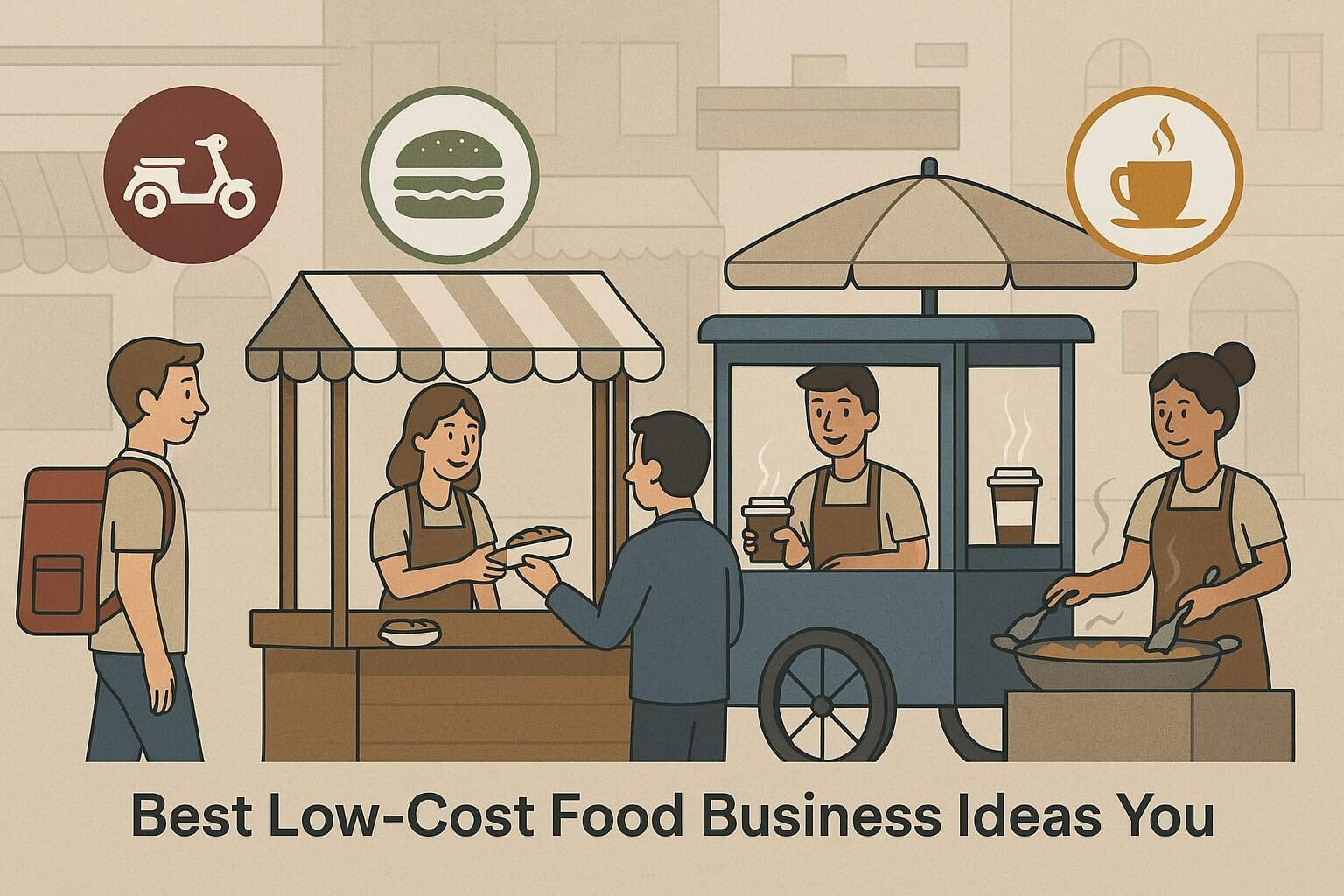
Best Low-Cost Food Business Ideas You Can Start Today
Launching a food business doesn’t have to mean renting a huge commercial space or investing in expensive equipment. Thanks to changing consumer habits, delivery apps, cottage food laws, and social media marketing, there are more low-cost food business ideas than ever that you can start from home or with a small mobile setup.
This guide walks through practical options, startup costs, legal basics, marketing tips, and where the industry is headed so you can choose the right path for you.
Why Low-Cost Food Business Ideas Are Thriving in the U.S.
Over the last few years, the U.S. food industry has shifted toward convenience, delivery, and niche experiences. Consumers are comfortable ordering from home cooks, ghost kitchens, food trucks, and pop-up vendors.
At the same time, many states have expanded cottage food laws, allowing entrepreneurs to sell certain foods made at home, lowering the barrier to entry.
Instead of needing hundreds of thousands of dollars to open a traditional restaurant, you can test low-cost food business ideas with a few hundred or a few thousand dollars, then scale if your concept catches on.
Delivery-only brands, farmers market stands, and home bakeries let you validate your recipes, branding, and pricing before signing any long-term lease.
Future trends favor small, flexible operators. Customer demand for healthier, local, sustainable, and culturally diverse food continues to grow, and big chains can’t move as fast as small entrepreneurs.
As online ordering, QR code menus, and digital payments become fully mainstream, you’ll have more tools to run lean and keep your food business profitable from day one.
Key Benefits of Starting a Low-Cost Food Business Today
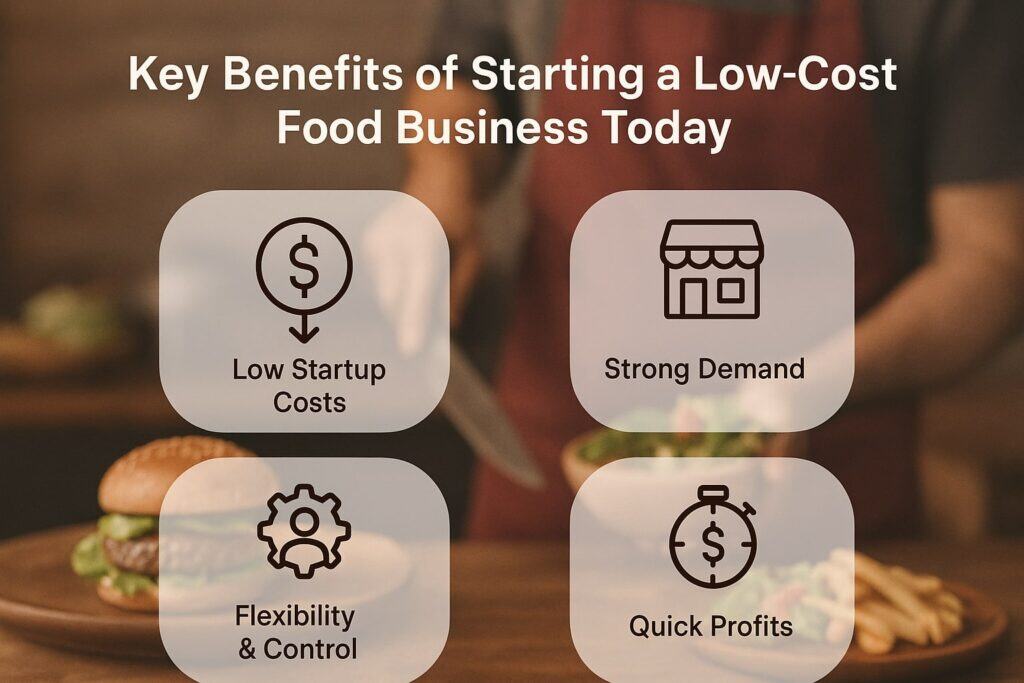
When you compare traditional restaurants to low-cost food business ideas, the advantages are obvious:
1. Lower Financial Risk and Flexible Scaling
Most aspiring food entrepreneurs get stuck on the cost of rent, build-out, and commercial kitchen equipment. With low-cost food business ideas, you can:
- Start from home under cottage food laws (where allowed).
- Rent a shared commercial kitchen by the hour.
- Sell at markets, fairs, or online instead of opening a storefront.
- Begin with a very small menu and scale up only when demand proves it’s worth it.
This approach keeps your overhead low and risk manageable. If one product doesn’t sell, you can pivot quickly without losing a big investment. As the business grows, you can add delivery, wholesale, or catering lines.
2. Faster Launch and Easier Testing
Most low-cost food business ideas can be launched in weeks, not months:
- You can build a basic brand, logo, and Instagram account quickly.
- Pre-sell batches of your product to friends, coworkers, and neighbors.
- Use online order forms and simple payment links instead of custom apps.
- Collect real feedback before you commit to a niche or invest in advanced equipment.
In the future, AI tools, automated ordering, and better delivery marketplaces will make it even easier to test micro-food brands, so getting comfortable with this fast-launch mindset now gives you an advantage.
3. Ability to Serve Niche and Local Markets
High-rent restaurants often have to appeal to a broad audience. In contrast, low-cost food business ideas can afford to go niche:
- Gluten-free or allergen-friendly treats.
- Regional cuisines or fusion concepts.
- Healthy meal prep for busy professionals.
- Sports team snack packs, kids’ lunch kits, or corporate snack boxes.
Hyper-local and niche positioning will remain strong because consumers like supporting specialized, small-batch brands they can’t get anywhere else.
Home Bakery or Cottage Food Business
One of the most popular low-cost food business ideas in the U.S. is a home bakery or cottage food operation. Many states allow you to sell certain “non-potentially hazardous” foods (typically items that don’t require refrigeration) from your home kitchen.
What You Can Sell and Legal Basics
Under many state cottage food laws, you can sell:
- Cookies, brownies, and bars
- Cakes, cupcakes, and muffins
- Breads, bagels, and rolls
- Pies with non-perishable fillings
- Homemade jams, jellies, and certain candies
You usually must:
- Register as a cottage food operator or obtain a permit in your state.
- Complete a basic food safety course.
- Label your products with ingredients, allergens, and any required disclaimers.
- Follow sales limits or restrictions (for example, some states cap annual sales or restrict where you can sell).
Because each state has different rules, you should check your state’s health department or agriculture department website for the latest regulations before launching your low-cost food business ideas from home.
Startup Costs and Profit Potential
A home bakery is affordable compared with a storefront bakery:
- Basic equipment you may already own: oven, mixer, baking sheets.
- Upgrades: higher-capacity mixer, extra trays, storage containers.
- Packaging: boxes, labels, and ingredient stickers.
- Licenses and permits: cottage food registration fees vary by state.
You can start with a few hundred dollars and scale up as orders increase. Profit margins can be strong since raw ingredients like flour, sugar, and butter are relatively cheap compared with the final retail price of decorated cakes or premium cookies.
In the future, expect cottage food laws to continue expanding, with more states allowing online sales, shipping within the state, or increased sales caps. That opens even more room for home-based low-cost food business ideas to grow into full-time operations.
Meal Prep and Healthy Food Delivery Service
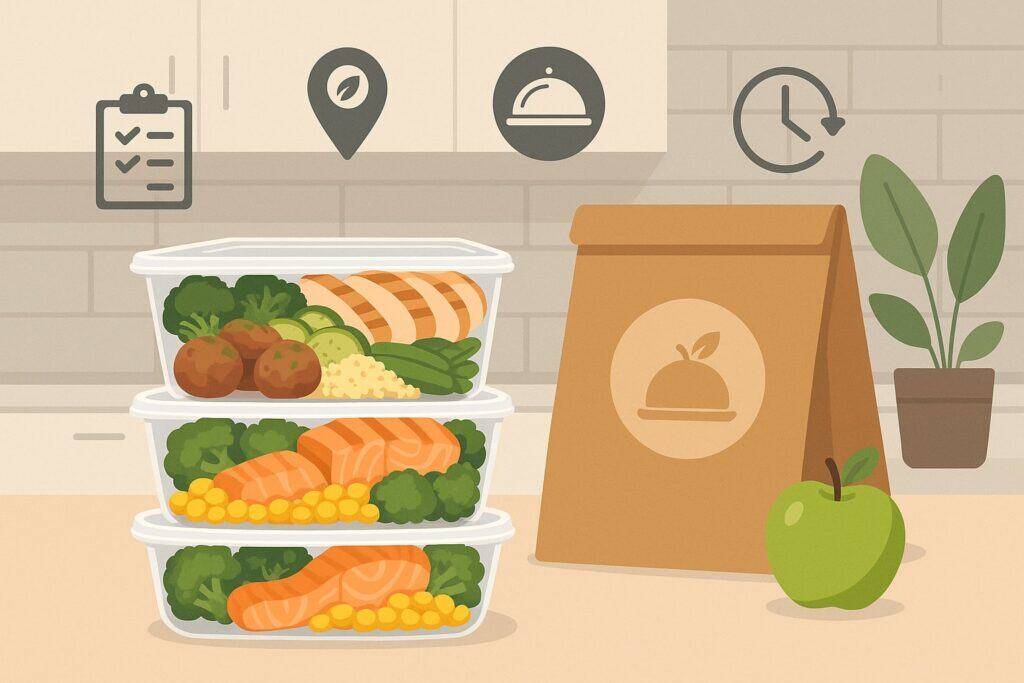
As more Americans prioritize health but struggle with time, meal prep and healthy delivery is one of the most in-demand low-cost food business ideas.
Who This Business Serves
Your ideal customers might include:
- Busy professionals who want healthy lunches and dinners.
- Parents juggling work and children’s schedules.
- Athletes, gym members, and fitness enthusiasts.
- People with specific diets: keto, gluten free, vegan, diabetic-friendly, or high protein.
You can design weekly menus and deliver prepared meals to homes, offices, or designated pickup spots.
How to Keep Costs Low
To keep this one of your most practical low-cost food business ideas:
- Use a limited rotating menu to reduce ingredient waste.
- Focus on a few meal types (e.g., bowls, salads, or casseroles).
- Partner with a local gym, yoga studio, or health coach for referrals.
- Start as a weekly subscription service to better predict inventory.
In many states, you’ll need access to a permitted commercial kitchen rather than cooking at home because prepared meals often require refrigeration and have stricter safety guidelines. You can rent time in a shared kitchen to control costs.
Future Outlook
Demand for meal prep and healthy food is expected to grow as wellness trends continue and remote workers seek convenient, nutritious options. Digital ordering, subscription apps, and nutrition tracking tools allow smaller operators to act like big brands.
If you build a strong base now, your low-cost food business ideas in meal prep could evolve into a regional brand, ghost kitchen network, or franchise.
Food Truck, Cart, or Pop-Up Stand
If you want face-to-face customer interaction without a full restaurant, mobile food concepts are powerful low-cost food business ideas compared with permanent brick-and-mortar locations.
Types of Mobile Food Businesses
You don’t have to buy a full food truck right away. Consider:
- Food cart or kiosk in a busy area (hot dogs, soft pretzels, churros).
- Tent setup at farmers markets and festivals (tacos, BBQ, lemonade).
- Pop-up stands inside breweries or shared retail spaces.
- Seasonal stands (shaved ice in summer, hot chocolate in winter).
Each of these low-cost food business ideas lets you test specific locations and menus without long-term commitments.
Licensing, Permits, and Insurance
Mobile food businesses typically require:
- A business license and food vendor permit.
- Health department inspection of your vehicle or setup.
- Commissary or commercial kitchen access to prep and store food.
- Vehicle insurance and general liability insurance.
Rules vary widely by city and county, so always check your local health department and city hall requirements.
Future Trends for Mobile Food
Food trucks and mobile vendors are likely to remain popular. Cities often host rotating food truck events, and many corporations invite vendors for employee lunches. As contactless payments, QR codes, and mobile ordering grow more standard, mobile low-cost food business ideas can operate more efficiently and serve more customers in less time.
Online Food Brand or Ghost Kitchen
One of the most modern low-cost food business ideas is the ghost kitchen model. Instead of a dining room, you operate from a commercial kitchen and sell exclusively via delivery platforms or your own ordering site.
How Ghost Kitchens Work
A ghost kitchen or virtual restaurant:
- Preps food in a licensed kitchen (shared or private).
- Lists menus on delivery platforms (DoorDash, Uber Eats, Grubhub, etc.).
- Uses strong branding, packaging, and digital marketing to stand out.
- Often runs multiple virtual brands from the same kitchen.
Because you’re not paying for décor, waitstaff, or dining space, this can be one of the leanest low-cost food business ideas if managed carefully.
Costs and Revenue Considerations
Main costs:
- Kitchen rent and utilities.
- Ingredients and packaging.
- Labor.
- Commissions to delivery apps (which can be high).
To keep this truly one of your low-cost food business ideas, consider building a direct ordering channel with lower fees and encourage repeat customers to order directly rather than through marketplaces. Over time, you can collect data on your best-selling dishes and optimize your menu.
Future Outlook
Ghost kitchens and virtual brands will likely keep growing, especially in dense urban areas with high delivery demand. Expect more competition but also more tools for independent operators: better online ordering platforms, kitchen-sharing networks, and data analytics that help fine-tune menus and profits.
Specialty Beverage or Smoothie Business
Not every food business needs a full food menu. A focused beverage concept can be one of the most profitable low-cost food business ideas.
Types of Beverage Concepts
You can specialize in:
- Smoothies and smoothie bowls.
- Fresh juices and wellness shots.
- Bubble tea or specialty iced teas.
- Gourmet lemonade and flavored sodas.
- Cold brew coffee and nitro coffee.
These low-cost food business ideas work well as pop-up stands, farmers market booths, mobile carts, or small kiosks in gyms, malls, or college campuses.
Why Beverages Are Cost-Effective
Beverage concepts can be highly profitable because:
- Ingredient costs are often lower relative to selling price.
- Preparation is generally quicker than full meals.
- Equipment is simpler (blenders, juicers, refrigerators).
- Menu items are easy to customize and upsell with add-ons.
As consumers continue to seek functional ingredients—like protein, collagen, probiotics, or adaptogens—there’s room for innovation. Your low-cost food business ideas in beverages can incorporate health trends while staying simple to operate.
Farmers Market Food Stall
Farmers markets across the U.S. give new entrepreneurs a built-in customer base and foot traffic, making them ideal for testing low-cost food business ideas.
What Sells Well at Farmers Markets
Popular options include:
- Baked goods and artisan breads.
- Jams, sauces, salsas, and pickles.
- Local honey and infused oils.
- Ethnic street foods and ready-to-eat snacks.
These low-cost food business ideas let customers sample your product, give feedback, and become loyal fans. Markets also attract people who are open to trying new brands and who value local, small-batch producers.
How to Get Started
To launch a farmers market food business:
- Research local market requirements and application periods.
- Ensure your product fits cottage food rules or obtain necessary permits.
- Invest in a simple booth setup: tent, tables, signage, and packaging.
- Prepare samples and offer tasting where allowed to boost sales.
- Collect emails or social media follows for future online orders.
Farmers markets also act as a powerful testing ground. If your low-cost food business ideas perform well here, you can consider wholesale deals, online sales, or permanent retail later.
Homemade Sauces, Spices, and Packaged Foods
If you love recipe development more than daily cooking, consider low-cost food business ideas focused on packaged goods: sauces, spice blends, rubs, marinades, granola, or snack mixes.
Advantages of Packaged Food Businesses
- Longer shelf life reduces waste.
- Easier to store and ship.
- Potential for wholesale to local grocery stores or specialty shops.
- Ability to sell online nationwide (subject to regulations).
You’ll need to pay close attention to labeling rules, nutrition facts requirements, and possibly co-packing (outsourcing production) once you scale, but at the small-batch level, this can be one of your most scalable low-cost food business ideas.
Future Potential
As consumers search for unique flavors and global cuisines, small-batch packaged food brands have strong growth potential. If you create a distinctive, high-quality product, you could expand into regional chains or major retailers over time.
Home-Based Catering and Micro Events
Catering doesn’t always mean huge weddings and corporate galas. Smaller, focused catering can be one of the most flexible low-cost food business ideas.
Types of Micro Catering Niches
Consider:
- Office lunch catering for small teams.
- Event platters and grazing boards.
- Kids’ party food and dessert tables.
- Brunch or charcuterie experiences.
You can start from a shared commercial kitchen and focus only on pre-booked events. This makes your low-cost food business ideas more predictable, since you know guest counts, dietary needs, and menu choices in advance.
Marketing and Growth
To grow a small catering business:
- Build partnerships with event planners, photographers, or venues.
- Offer special packages for holidays and seasonal events.
- Encourage clients to share photos and reviews online.
- Collect testimonials and build a portfolio.
Over time, recurring clients and word-of-mouth can turn micro catering into a steady, profitable business without requiring a fixed storefront.
Home-Based Snacks and Dessert Boxes
Another trending category of low-cost food business ideas is curated snack and dessert boxes. These boxes can be themed and sold locally or, where allowed, shipped.
Types of Boxes You Can Offer
- Birthday dessert boxes with mixed treats.
- Movie night snack kits.
- Seasonal holiday boxes (Valentine’s, Halloween, Christmas).
- Corporate appreciation boxes for employees or clients.
- Regional or cultural snack boxes (e.g., “Taste of the South,” “Latin sweets,” etc.).
These low-cost food business ideas allow for creativity and strong branding. You can design memorable packaging and unboxing experiences that customers love to share on social media.
How to Validate Your Low-Cost Food Business Idea Before You Launch
No matter which low-cost food business ideas you choose, validation is crucial. You want to confirm there is real demand before investing heavily.
Simple Validation Methods
- Sell to friends, coworkers, or neighbors and collect feedback.
- Offer pre-orders through social media or a simple landing page.
- Test at a local event, pop-up, or market.
- Give free samples to potential partners (like gyms or coffee shops) and track their interest.
Pay attention to pricing feedback, repeat orders, and what customers say they would change. This data helps refine your menu and brand so your low-cost food business ideas stand out from competitors.
Marketing Strategies for Low-Cost Food Businesses in the U.S.
A great product isn’t enough. Effective marketing makes low-cost food business ideas visible and profitable.
Digital Marketing Essentials
- Google Business Profile: Claim one if you have a physical presence or defined service area so you appear in local searches.
- Social Media: Focus on Instagram, TikTok, and Facebook. Post behind-the-scenes content, short recipe clips, and customer testimonials.
- Email List: Collect emails at markets, on your website, or with QR codes to send offers, new menu announcements, and holiday promotions.
- Simple Website or Landing Page: Include your menu, pricing, order instructions, and contact info.
Use location keywords and relevant phrases like “low-cost food business ideas,” “meal prep near me,” “farmers market bakery,” or “home-based catering in [your city]” to help search engines understand your business and attract local traffic.
Offline and Community Marketing
Offline tactics still matter:
- Partner with local businesses to cross-promote.
- Donate samples to community events or charity fundraisers.
- Deliver flyers or postcards to offices or apartment buildings in your area.
- Join local business associations or chambers of commerce.
Community relationships build trust and strengthen your low-cost food business ideas long term.
Legal, Licensing, and Food Safety Essentials in the U.S.
Even though these are low-cost food business ideas, you still need to operate legally and safely.
Common Requirements
Requirements vary by state and city, but typically include:
- Business license or registration.
- Food handler or food manager certification.
- Sales tax registration where applicable.
- Health department permits for commercial or mobile operations.
- Insurance (general liability, product liability, vehicle insurance for mobile setups).
If you’re operating under cottage food laws, make sure you understand exactly what foods you’re allowed to sell from home and where you can sell them (direct to consumer, online, markets, etc.).
Food Safety and Quality
Food safety keeps customers healthy and protects your reputation:
- Follow proper temperature control for hot and cold foods.
- Label allergens clearly (milk, eggs, nuts, wheat, soy, fish, shellfish, etc.).
- Maintain strict hygiene and cleaning routines.
- Log temperatures and batch information if you’re producing in volume.
In the future, expect more digital tools for small operators—like easy HACCP templates, digital temperature logging, and affordable labeling software—to help your low-cost food business ideas stay compliant with less paperwork.
Technology Tools That Make Low-Cost Food Businesses Easier
Technology is one of your biggest advantages when launching low-cost food business ideas today.
Helpful Tools and Platforms
- Ordering and Payment: Use simple online ordering forms, payment links, or POS apps to accept card payments, contactless payments, or digital wallets.
- Delivery Management: You can use third-party apps, local couriers, or your own delivery system depending on your model.
- Inventory and Costing: Simple spreadsheets or affordable apps can track recipe costs, margins, and inventory.
- Design and Branding: Free or low-cost design tools help create logos, labels, and social media graphics.
Over time, AI and automation will keep simplifying marketing, customer support, and menu planning, so small operators can run professional-feeling low-cost food business ideas with minimal staff.
Frequently Asked Questions
Q1. How much money do I need to start a low-cost food business in the U.S.?
Answer: Startup costs for low-cost food business ideas vary widely. A basic cottage food bakery might start under $1,000 if you already own your equipment, while a small food cart or pop-up could require a few thousand dollars for equipment, permits, and initial inventory.
Ghost kitchens and food trucks usually require more capital because of rent or vehicle costs, but they are still cheaper than a full restaurant build-out.
Q2. Do I need a commercial kitchen, or can I cook at home?
Answer: It depends on what you’re selling and your state’s laws. Many low-cost food business ideas like baked goods, jams, and some packaged foods can be made at home under cottage food laws.
Prepared meals, meat-based foods, and perishable items usually require a licensed commercial kitchen. Always check your state and local regulations before launching.
Q3. Can I sell my homemade food online or ship it?
Answer: Some states allow cottage food businesses to sell online and deliver locally, while others restrict sales to in-person or specific venues. Shipping across state lines is more complex and usually requires more formal licensing and compliance.
When deciding which low-cost food business ideas to pursue, consider whether you want to sell only locally or eventually ship nationwide.
Q4. How do I price my food products?
Answer: To price low-cost food business ideas effectively:
- Calculate ingredient costs per unit.
- Add labor time, overhead (permits, rent, utilities), and packaging.
- Apply a profit margin that reflects your market, usually at least 2–3 times your total cost.
- Compare with competitors to ensure your prices are competitive while still profitable.
Don’t undercharge just to attract customers; focus on value, quality, and brand story.
Q5. What’s the best food business to start with low money?
Answer: The “best” low-cost food business ideas depend on your skills, location, and audience. Common low-cost options include home bakeries, meal prep services using a shared kitchen, farmers market stalls, and snack or dessert boxes. Choose something you’re passionate about that fits local demand and legal requirements.
Q6. How can I market my food business if I’m just starting?
Answer: Start small and consistent:
- Use social media to share photos, behind-the-scenes content, and customer reviews.
- Offer special discounts or referral bonuses to early customers.
- Attend local events, markets, or pop-ups to build awareness.
- Collaborate with other small businesses and influencers in your area.
Good marketing helps low-cost food business ideas grow quickly without huge ad budgets.
Conclusion
Starting a food business in the U.S. no longer requires a huge loan or a full restaurant build-out. From home bakeries and meal prep to mobile food carts, farmers market stalls, and ghost kitchens, there are many low-cost food business ideas that let you start small, learn fast, and scale at your own pace.
To move from dreaming to doing:
- Pick a concept that fits your skills, lifestyle, and local market.
- Research laws in your state so you stay compliant from day one.
- Validate your idea with small test batches and real customer feedback.
- Invest in branding and marketing, even if it’s simple at first.
- Use technology to manage orders, payments, and customer communication.
As consumer demand for convenient, local, and specialty foods continues to grow, entrepreneurs who act now will be well-positioned for the future.
With smart planning and consistent effort, your chosen low-cost food business ideas can evolve from a side hustle into a profitable, sustainable food brand that serves your community and supports your financial goals.